

If you’re a Janeite, you probably remember your first Austen novel. Mine was Sense and Sensibility. My mom – seeing that I was ready for more “grown-up” reading material – bought me a copy when I was a high school freshman, and I devoured it. I loved the writing, the restrained drama, and the feeling of being a grown reader. Most of all, I loved that I could relate to this book that was written so long ago and had become such a classic. I saw myself in practical Elinor, and I rolled my eyes at Marianne the way I used to do at a particular drama-loving friend. I was used to identifying with book characters – bookish Elizabeth from the Sweet Valley series, for instance, or casual, green-leaning Dawn from the Baby-Sitters Club books. But in Elinor Dashwood, I saw for the first time that I could identify with adult characters in classic literature, too, and it opened up a whole new horizon.

Over time, I read all of Austen’s books. I have always been a character-driven reader, and Austen’s heroines spoke to me. Sparkling Elizabeth Bennet – quiet Fanny Price – steadfast Anne Elliot. I seethed at the treacherous antics of Lucy Steele and Mary Crawford, and I fell in love with secondary characters like Charlotte Lucas and Jane Fairfax. I have read all of the books multiple times now, and I know them like the back of my hand. And of course, I have my favorites.
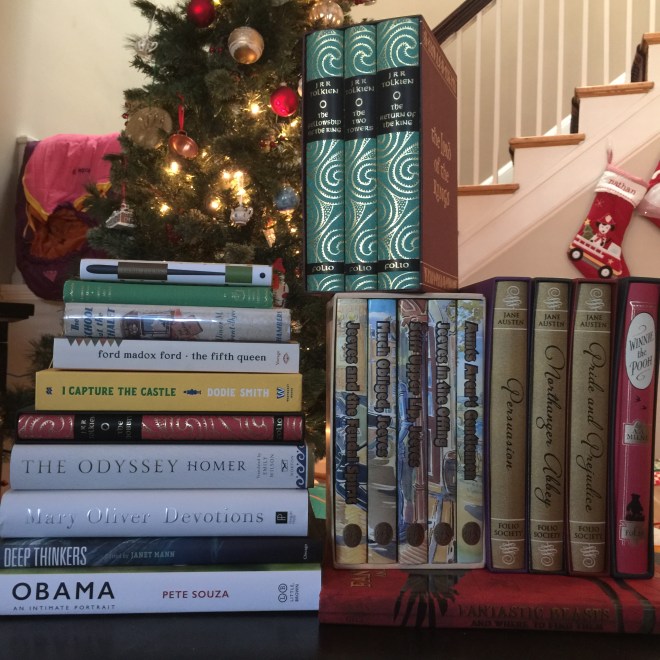
This past Christmas, Steve gifted me with a veritable mountain of books, including the gorgeous (and much-coveted) Folio Society editions of my three favorite Austen novels: Pride and Prejudice, Persuasion, and Northanger Abbey. Yes – Northanger Abbey. NOT Emma.

Some of you are cheering me right now, I know, and others have their hands on their hips and are getting ready to explain why I’m just wrong about Emma. I have a good friend and fellow Janeite who adores Miss Woodhouse and can’t abide Miss Morland. But here’s my thing: I’m a character-driven reader. While I love a good plot (especially in a mystery novel) and I live for gorgeous nature writing (of the kind L.M. Montgomery does so beautifully) if the main character doesn’t capture my sympathy, nine times out of ten the book is ruined for me. And I really, really don’t care for Emma Woodhouse. She is vain. She is snobbish. She is selfish. She is inconsiderate. She believes herself to be superior to nearly everyone around her. She meddles in other people’s lives. I just think she’s a horrible person. Nearly every time she opens her mouth, I want to shout, “That was badly done, Emma!”

I will say that Emma is one of the small minority of books that I still like despite the main character. I love the village of Highbury and its denizens – especially the Bates ladies. And Jane Fairfax is one of my favorite secondary characters in all of literature – I wish Austen had written the book about her. And of course Emma gets a bit of comeuppance in the form of Mrs. Elton. I know I give Emma a hard time. After all, rich or poor, we all need to grow up and mature. It’s just that most of us don’t get the indulgence of doing our growing up and maturing while leaving a wake of destruction behind us.
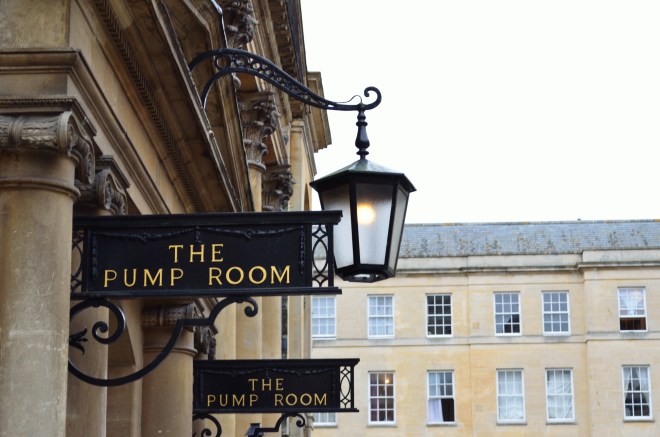
By contrast, I just enjoy Northanger Abbey so much more. Rather like Emma, it’s a coming-of-age story. Catherine Morland begins the novel as a silly young girl, just leaving home to see the world for the first time. In Bath, she meets Isabella Thorpe, who introduces the two points of conflict in the book: the novels of Ann Radcliffe and Isabella’s brother John Thorpe. Catherine then proceeds to let herself get swept away – unable to get out from under the thumb of the domineering John in Bath, and with a runaway imagination once she finally escapes John and heads to Northanger Abbey with Henry and Eleanor Tilney. At Northanger, Catherine makes a series of dumb decisions – including the decision to go sneaking around the house and investigate Henry and Eleanor’s mother’s room because she believes (thank you, Ann Radcliffe!) that the woman must have been murdered or at least killed by neglect. (In the “updated” version of Northanger, written by Val McDermid, Catherine is a Twihard, which sounds about right.) Catherine embarrasses herself (“Remember we are English!”) and nearly loses her chance at happiness with Henry because of her foolishness. But somehow, it’s more endearing than Emma’s foolishness. Perhaps because it’s foolishness born of bookishness instead of snobbishness.
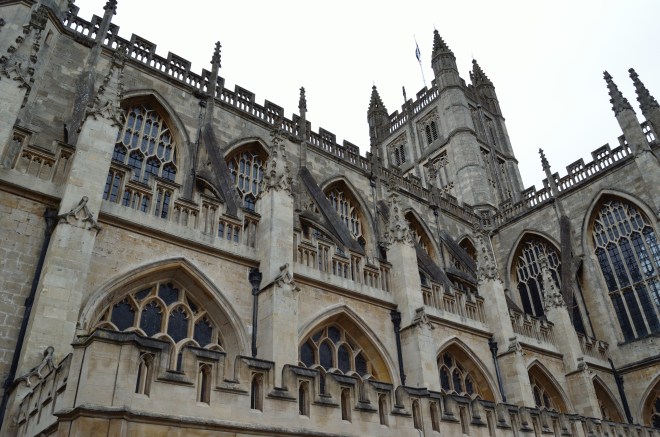
I’ve had quite a few debates about Northanger Abbey with a dear Janeite friend of mine. It seems to inspire great argument and divisiveness even among Jane’s most devoted fans. This friend considers Northanger her “sixth favorite” Austen novel – she may even dislike it. (!!!) She considers Catherine to be a flake (well, she is a flake) and Henry to be a mansplainer (that I don’t agree with, because mansplaining is when a man explains to a woman about something she knows better than he does; I’ve been mansplained plenty, and that’s not what Henry does). Meanwhile, she loves Emma. (She adores Mr. Knightley. I’m quite happy to cede that point to her, as he is one of my favorite Austen heroes too.)
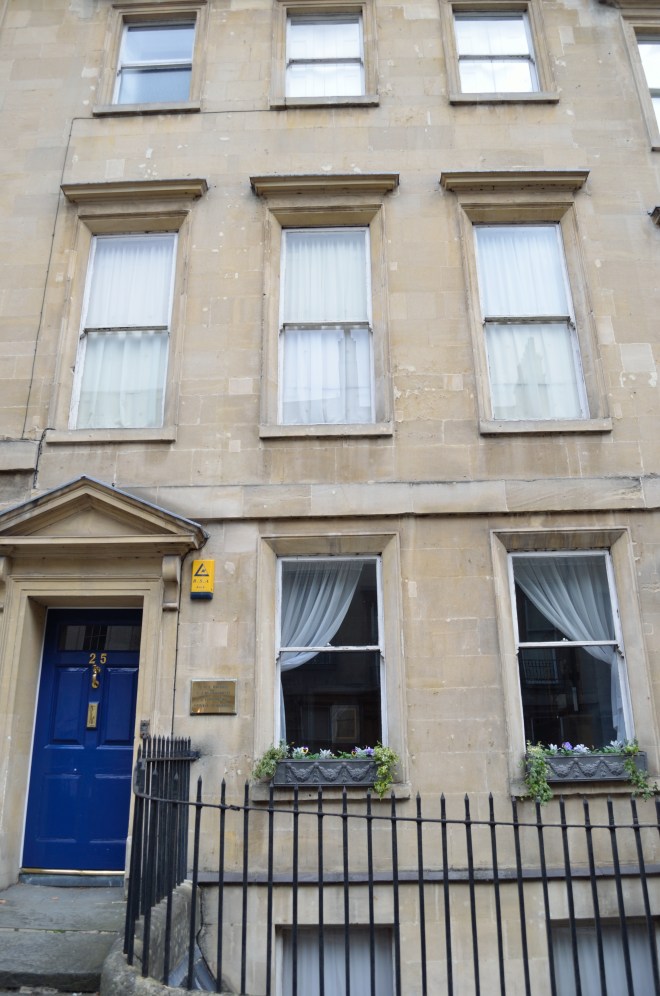
One of Jane Austen’s several residences in Bath.
Meanwhile, it seems there’s nothing you can say to so divide Janeites than to declare that Northanger Abbey is one of your favorites. (For me, it clocks in at number two, because nothing could displace my dear Pride and Prejudice, which is the most perfect book ever written.) I recently joined the “Drunk Janeites” group on Facebook (such a fun bunch) and we’ve had a few lively discussions about Northanger Abbey. (All very polite. They usually start with someone expressing an intent to read it for the first time, and the responses are about evenly divided between “OMGeeeeeee you’re gonna LOVE it TILNEY SWOOOOOON” and “Not my personal favorite, but I hope you’ll enjoy it!”) Still, I thought it was interesting how Northanger seems to provoke more (friendly and respectful) disagreement than any other Austen book. I do wonder why that is.
How do you feel about Catherine Morland and Emma Woodhouse?
 covered in flour