

Reading is my oldest and favorite hobby. I literally can’t remember a time in my life when I didn’t love to curl up with a good book. Here are my reads for June, 2017…
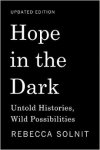 Hope in the Dark, by Rebecca Solnit – Solnit wrote Hope in the Dark back in the 2000s, in response to the Bush Administration and its wars in Iraq and Afghanistan, and she recently updated it and made it available at a reduced price for those who need a dose in 2017, which I call very decent of her. Making the case for hope even when sanity and community seem to have fled the world, Solnit works her way through the recent history of the global social justice movement, explaining how so much more has been achieved than we realize, and how the journey is a victory in and of itself. Solnit argues against making the perfect the enemy of the good and holds up examples of successes as reasons to celebrate – reminding readers that while, yes, the goal is a perfectly just society, and of course we’re nowhere near it, we’ve achieved great things already. The book is a perfect antidote to the storms raging in our political landscape right now. It took months to read because I downloaded it to my phone (and reading for more than a few minutes on my phone gives me headaches) but it was well worth it and I am sure I will come back to this slim but comforting book.
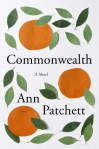 Commonwealth, by Ann Patchett – Patchett’s latest novel was hotly anticipated and widely acclaimed. The book opens when Bert Cousins shows up uninvited at a Christening party for little Franny Keating, kisses Franny’s mother, and sets in motion the dissolution of two marriages and the combining of the Keating and Cousins families. Franny and her sister Caroline grow up spending their summers in Virginia with their mother and Bert, and they bond with Bert’s children over a mutual dislike of their parents – then one day, tragedy strikes. Years later, grown-up Franny begins an affair with an elderly author. When she tells him about her life, he decides that it should be a book… and Franny loses control of the narrative. So – I liked, but did not love, Commonwealth. None of the characters were particularly likeable, and I found it hard to care what happened to them. I appreciated the skill with which the novel was written, but it didn’t really do anything for me.
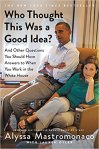 Who Thought This Was A Good Idea? And Other Questions You Need Answers To When You Work In The White House, by Alyssa Mastromonaco – I’d been eyeing Mastromonaco’s memoir of her years in the Obama White House and was planning to check it out of the library when I realized that the audiobook was read by the author and used an Audible credit to grab it. I started listening immediately and loved it. Mastromonaco is chatty and engaging, and her memoir of her career is fascinating. She has worked for Bernie Sanders, John Kerry’s Presidential campaign, and of course for President Obama. Mastromonaco doesn’t tell her life story in chronological order, but instead shares her stories in chapters organized around traits and values that she believes helped her succeed in her working life. Of course she was right at the center of things for many years, and she delivers plenty of fascinating insider details about the Kerry campaign and the Obama campaign and White House, which she intersperses with terrific career and professional advice. The audio production was wonderful as well. I think this is a memoir I’ll definitely listen to over again.
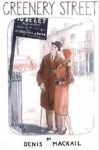 Greenery Street, by Denis Mackail – When we meet Ian and Felicity Foster, they are a young couple planning their marriage, looking for their first home and plotting out their new life together – which makes them perfect candidates for Greenery Street. Greenery Street, almost a character in and of itself, is a small side street in London that makes it a specialty to lure young married couples to set up housekeeping there. The street is charming, lined with houses that are just the right size for a couple starting out in life (and a few servants, of course). But every couple who sets up housekeeping on Greenery Street has their departure preordained; the moment the word “nursery” creeps into conversation, the house will begin to seem small and Greenery Street will be expelling the new family – on to a bigger home for them and on to a new young couple for the street. Greenery Street follows Ian and Felicity through their first year of marriage, before they too add a baby and depart from the street, and it is simply a joy to read. Funny, engaging, and simply delightful – we sympathize with Ian and Felicity through Family Drama, Rude Neighbors, Money Worries, and Problems With The Servants (that last being the most hilarious). We learn what Ian and Felicity read, what they eat, and how obsessed they are with their dog. Nothing much happens, and I could have stayed in the Greenery Street world happily for months. (There are two sequels, Tales from Greenery Street and Ian and Felicity, but they’re next to impossible to find – so here’s my official request that Persephone publishes the whole series and not just the first!)
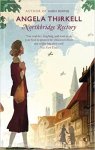 Northbridge Rectory (Angela Thirkell’s Barsetshire #10) – Oops. For some reason I thought Northbridge Rectory was next up in Angela Thirkell’s Barsetshire series and ended up skipping from six to ten. Luckily, these are books that can be read out of order. I loved Northbridge Rectory (and got a huge kick out of the fact that I was reading Greenery Street at the same time – which was written by Thirkell’s brother Denis Mackail). Northbridge Rectory follows the inhabitants of the village of Northbridge for several months during one WWII autumn and Christmas season. The Rectory is the focal point and we get to know Verena Villars, the Rector’s wife, particularly well. Mrs. Villars is responsible for supporting her husband in his ministry as well as hosting a group of billeted officers – one of whom is quietly in love with her. (She has no idea and would be astonished if she knew.) We watch, along with Mrs. Villars, as the village prepares for war and the rest of the residents of Northbridge find themselves in and out of all sorts of matters of the heart. It was a delightful read and I can see why the WWII novels are some of Thirkell’s most popular.
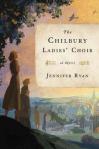 The Chilbury Ladies’ Choir, by Jennifer Ryan – I’d heard so much about this debut novel and it didn’t disappoint. Defying the Vicar’s order that the church choir be disbanded since all of the men are off at war, the women of Chilbury reorganize themselves as the Chilbury Ladies’ Choir. The book follows several of them for one summer – sweet Mrs. Tilling; scheming Miss Paltry; wild Venetia Winthrop; and more – as they navigate the new wartime reality of their lives. There are squabbles over loves, there are tragic losses, and there is a lot of singing. The Chilbury Ladies’ Choir was a lovely and ringing testament to the power of community to help us through the darkest times. I couldn’t put it down, and ended up finishing it in two days – much to my disappointment, because I’d have liked to spend a lot more time with the choir.
 Lincoln in the Bardo, by George Saunders – This was one that I felt compelled to read because of all the buzz it was getting. Young Willie Lincoln has died of typhoid and been interred at Oak Ridge Cemetery in Georgetown. On the night of Willie’s funeral, his father, President Lincoln, pays a visit to the cemetery and holds his son’s body. The result – a battle for Willie’s soul – is told via a cacophony of voices, as excerpts from both real and imagined historical accounts of Lincoln’s life and presidency as well as in a structure reminiscent of a play, with the players being the other shades who are present with Willie in the cemetery on the night of the President’s visit. Well – I certainly appreciated the wildly creative nature of Lincoln in the Bardo, and I cried buckets while reading it. I can understand the buzz and hype and I don’t think they’re misplaced. For me, though, I am at a stage where I really want comfort reading, and Lincoln in the Bardo is very much not comfort reading (especially if you have children). I couldn’t put it down, and I thought it was astonishingly well-done, but it gave me nightmares.
A bit of a slow June – seven books, including one audiobook. That seems to be par for the course in the summertime. But there were certainly some gems amongst the handful this month – Greenery Street, The Chilbury Ladies’ Choir, and Northbridge Rectory were all delights. (I’d probably rank Northbridge Rectory the highest if you absolutely made me pick a favorite this month, but please don’t make me.) Next month will probably be more of the same type of reading – I’m on a major comfort zone reading jag, and not even mad about it – but I’m hoping to post a better number for you, since we’re not going out of town again for awhile. (Not that my weekends won’t be packed with activity, because they always are.) Check back!
What was the best thing you read in June?
 covered in flour