

The classics are wonderful, and they’ve stood the test of time and become classics for a reason. Any home poetry library would be incomplete without them! But one thing I’ve discovered as I have explored more deeply in the world of children’s verses is that there is a great deal of extremely high quality modern poetry for kids – poems by living, working writers who have managed to capture the joy and magic of childhood, the wonders of nature, and the fun of exploring the world.
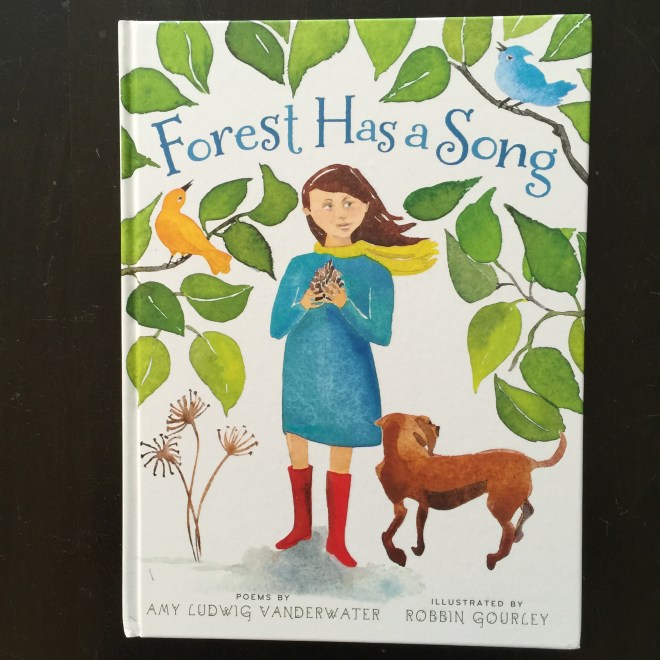
Forest Has a Song, by Amy Ludwig Vanderwater, is a recent find from Monkey See Monkey Do, our local children’s bookstore. (In fact, it was one of the books I picked up at the end of Nugget’s storytelling birthday party.) The poems in this lovely book are all related to nature. They’re quite contemporary – many do not rhyme, which flies in the face of lots of the children’s poetry out there – and they’re gorgeous.
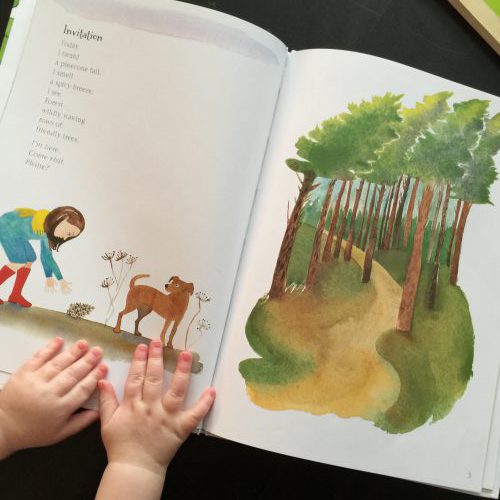
The poems have a sense of rhythm without rhyme, and the simple watercolor illustrations beautifully convey the natural world that the poems evoke.
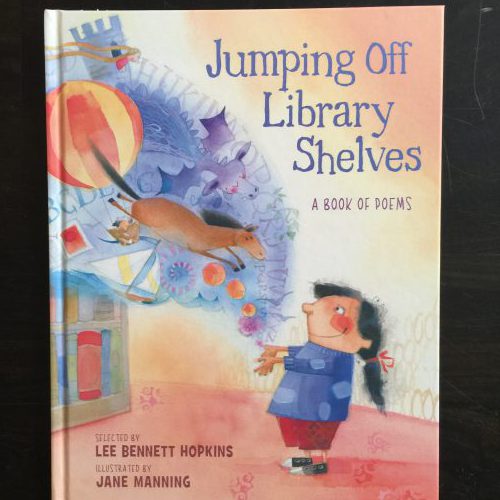
Jumping Off Library Shelves, by Lee Bennett Hopkins, is a book of poems all dedicated to one topic (and a topic that happens to be very dear to my heart, at that) – the LIBRARY. Again, many of the poems do not rhyme, and it makes for a wonderful first look at some different poetic structures. But there are some more “traditional” rhyming verses to be found, too, including one that is just perfect for National Poetry Month —
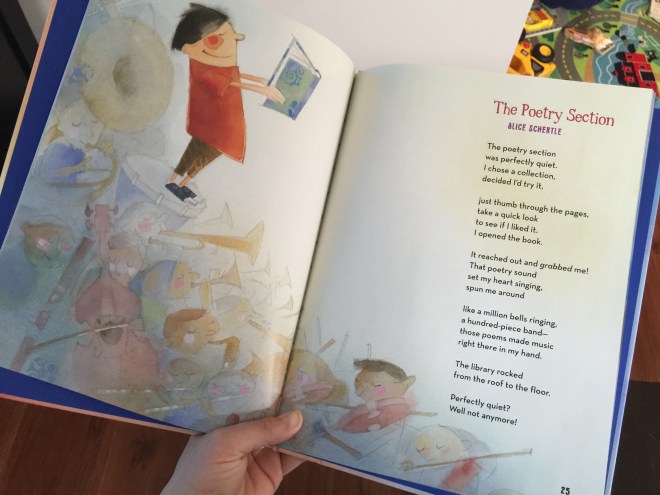
My mom flipped through this book on a recent visit. She was enchanted and said she was going to recommend it to the school librarian at the elementary school at which she teaches – he’s a new father and she felt sure he would want to share these library-themed poems with his son and his students. I agreed, since I think any library lover would find a great deal to enjoy in Jumping Off Library Shelves.
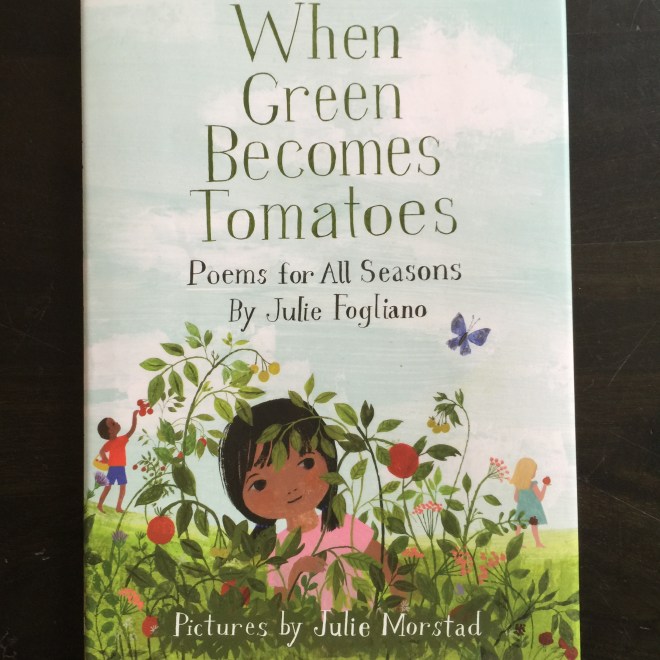
The only one of our modern choices not found at Monkey See Monkey Do, When Green Becomes Tomatoes, by Julie Fogliano, found its way to us after I spotted a review in the Shelf Awareness for Readers newsletter. (That newsletter has brought me many great bookish finds and friends, but the best ones have been my pen pal Katie and social media friend Kerry.)
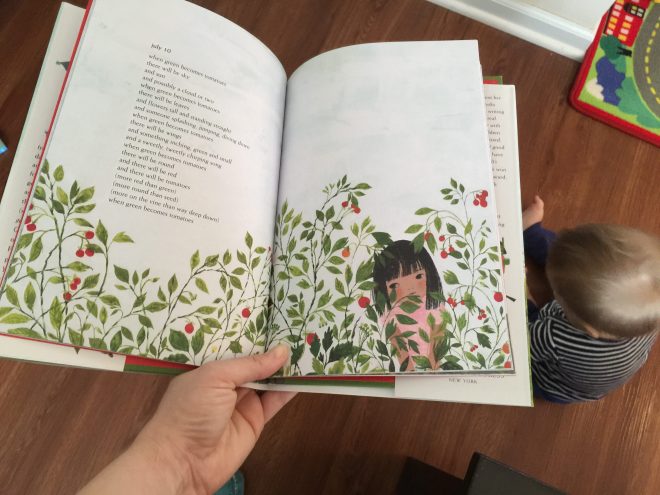
The seasonal poems are such fun to work through as the weeks march along, and I absolutely love the bold modern illustrations. Rather than titled, the poems are dated for random days throughout the year; it would make such a fun project, for a family that is more organized than we are, to make a yearlong project out of reading each poem on its designated day. As for us, we’ve just been flipping through and reading whatever catches our fancy, but with a special emphasis on the current season.

Have you recently discovered any new favorite poetry for kids and kids-at-heart?



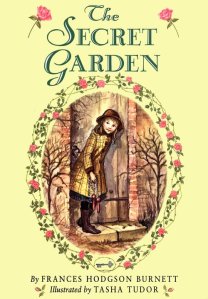 My first pick, of course, has to be The Secret Garden, by Frances Hodgson Burnett. For many of us – me included – it is the definitive spring read. Young Mary Lennox is sent from India, the only home she has ever known, to be ward in the house of a wealthy, but reclusive, uncle. “Mary Mary Quite Contrary” is bored and resentful – until she gets “a bit o’ earth” to nurture. Soon Mary discovers a walled garden, neglected since the mistress of the house passed away. With the help of local boy Dickon, Mary gradually comes out of her own shell and then turns her attention to drawing out her fretful, hypochondriac cousin Colin. Soon the crisp spring air, warm sunshine, cheerful robins and budding garden are working miracles on both lonely children – but what will happen if Mary, Dickon and Colin are discovered in the forbidden garden?
 In The Enchanted April, by Elizabeth von Arnim, four strangers (or near-strangers) rent an Italian castle together, and their souls are healed by “wisteria and sunshine.” On a rainy day in Hampstead, Lotty Wilkins spies an advertisement for an Italian castle for rent for the month of April. Dreaming of escaping the cold weather and an even colder marriage, Lotty allows herself to fantasize about a month in paradise – but actually renting the castle seems out of reach. That changes quickly when Lotty sees Rose Arbuthnot, a casual acquaintance, sighing over the same ad. Lotty convinces a reluctant Rose to come along for the ride and together the two women convince Mrs. Fisher, an elderly (and rather grumpy) widow, and young socialite Lady Caroline Dester, to combine forces and funds. At first, the project seems to be going poorly – there is some squabbling, mainly spearheaded by Mrs. Fisher, over garden access. But the Italian countryside soon works its magic over all of the ladies. Lotty and Rose spend hours sitting in one of the gardens that Mrs. Fisher permits them to use, and rambling through the wilderness. Lady Caroline (“Scrap,” to her friends) dozes in the sunshine and soon comes out of her shell as well, and even cantankerous Mrs. Fisher finds herself soothed and calmed by the peaceful retreat.
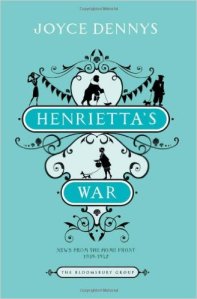 Henrietta is the wife of a Devonshire doctor, mother of two grown children, and feeling useless when we first meet her in Henrietta’s War, by Joyce Dennys. World War II has broken out and she is generally disqualified from the war work that most other women in the village are doing, as her role is to “take care of the doctor” and she simply can’t be spared for anything else. As a result, Henrietta is bored and embarrassed by her seeming uselessness, and she spends quite a lot of time pottering about in her garden and relating her activities therein to her “dear childhood’s friend” Robert, to whom she writes breezy, newsy letters to cheer up his service at the front. Henrietta is far from useless in the village, but she actually is rather useless in the garden, which is refreshing, and her tribulations are quite funny. Anyone who has struggled to keep plants alive (coughTHISgirlcough) will recognize Henrietta’s frustration, and nod along in relief – we’re not the only black thumbs out there!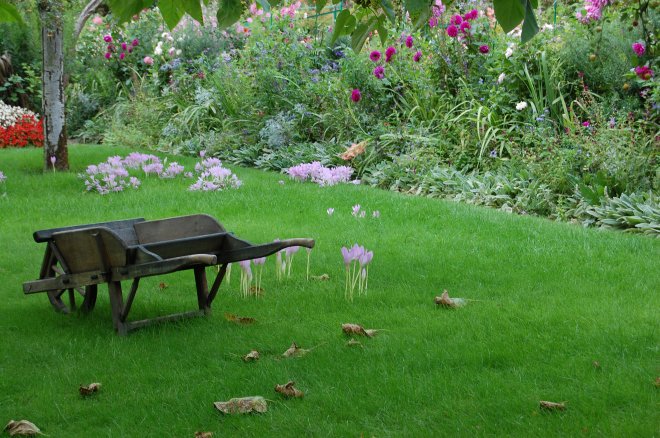




















 covered in flour