

Another week gone. This one was better but I’m still in a bit of a funk from my comically awful week at the end of February. I’m doing my best to shake it, though. This was one of those weekends that had us running around the entire time, but it was a lot of fun. On Saturday morning we attended a surprise birthday brunch for a friend. It was such a great morning. Our friend was very surprised, and thrilled, and everyone had a fabulous time at the party. The kids loved running around together and the grownups sipped mimosas and chatted – it was perfect. After the brunch we headed back to our townhouse and spent a few frantic hours cleaning up and finishing unpacking the living room. I was just D-O-N-E with the boxes and I announced that we were going to have the living room in shape before our evening plans. And we made it – just in time. Just after we finished our unpacking extravaganza, Grandpa arrived at 6:30 to babysit, and Steve and I headed out to a fundraiser at the kids’ preschool. It was a lovely night and we had a blast sipping wine and chatting with other parents. The highlight of the evening was a live auction of art pieces prepared by each classroom. I wasn’t planning to participate, but somewhat on a whim ended up bidding on the piece created by Nugget’s classroom – and I won! It’s an underwater scene and the fish – if you can’t tell – are made by hand- and footprints; one from each kid in Nugget’s class. I have a hunch which print is Nugget’s, but I’m hoping his teacher can confirm. On Sunday we were invited to join a group at a roller derby, but ended up passing because someone was still awake and running around like a maniac when we got home from the fundraiser. So Peanut had a snuggly day at home and Nugget and I ran errands most of Sunday. Not exactly a restful weekend, but fun.
As for reading, the week itself was slow but I polished off two books over the weekend – score. I took most of the week over it, but I finished Jam on the Vine on Saturday and was really impressed with the writing and the character development. I learned a lot from the book as well, but interested readers be forewarned: there are some very upsetting scenes of violence in the book. Fortunately, I was able to keep the mood light even with a pretty serious read, as I also had My Man Jeeves on the go on my phone. (Side note: why did it take me so long to realize I could download public domain books for free on iBooks? I went a bit crazy with downloads this week.) I finished Jeeves on Sunday and now have two new books on the go: Bill Bryson’s latest, The Road to Little Dribbling, out from the library, and The Enchanted April on my phone. I’m excited about both; I was already laughing so hard I was crying about three sentences into Little Dribbling, and April is one that has been on my list for awhile. So I’m looking ahead to what should be a good week in reading.
A look ahead to the rest of the week on the blog: I’ve got a final round-up of all of my monthly hikes from 2015 coming to you on Wednesday, and on Friday, Nugget’s TWELVE MONTH update. Can you believe he’ll be one year old in just a few days? I can’t even talk about it. Hold me.
What are you reading this week, my friends?










 The Immortal Life of Henrietta Lacks, by Rebecca Skloot – I had been meaning to read this one for years, and once I finally got to it, I was blown away. Henrietta Lacks was a cancer patient in Baltimore in the 1950s. Shortly before she died – from a particularly vicious strain of cervical cancer – and unbeknownst to Henrietta, doctors harvested a few of her cancerous cells. Up until Henrietta, no cells had ever managed to survive more than a few days after being harvested. Henrietta’s were special – they lived forever, dividing and dividing and dividing. HeLa, as the cells were named, went on to be instrumental in some of the most important scientific discoveries of the twentieth century. They were used in testing some of our most prevalent drugs. They were blown up in atomic bombs and shot into space. And all the while, Henrietta’s family had no idea that her cells lived on. They only discovered HeLa’s existence in the 1970s – more than twenty years after Henrietta’s death. To this day, they have not been paid for the cells, which were extracted without Henrietta’s knowledge or consent. And many of Henrietta’s descendants cannot afford health insurance. Henrietta Lacks is all the more amazing – and disturbing – of a story for being true. In Skloot’s capable hands, the reader comes to care deeply about Henrietta, her family, and the unfair system that has allowed some to profit handsomely from her cells while her family goes without insurance. My only complaint was Skloot’s occasional penchant for describing people by their weight – I don’t need to know that a particular individual was “a substantial woman, about 200 pounds,” or that another individual was 400 pounds. It wasn’t germane to the book and seemed a bit disrespectful. But that is my only (minor) quibble with the book – overall, I thought it was spellbinding and fascinating. Henrietta Lacks should be required reading for all human beings.
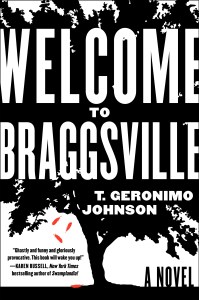 Welcome to Braggsville, by T. Geronimo Johnson – Daron Davenport is a son of the South, away from home for the first time as a student at UC Berkeley. When he mentions in a class that his hometown, Braggsville, stages an annual Civil War reenactment, Daron’s friends seize on the idea of a performance protest. They traipse to Braggsville for spring break and proceed to stick out like sore thumbs everywhere they go – but their antics take a quick turn from comedic to tragic. So… I liked Braggsville, but didn’t love it. The plot was intriguing, but something about the writing style just didn’t resonate with me. You ever read one of those books where you can appreciate that the writing is excellent, but it’s just not grabbing you? That was my experience with Braggsville. I found it hard to get invested in the story as a result. Still a worthwhile read and particularly interesting during Black History Month.
 March: Book One, by John Lewis – March is going to be a trilogy of graphic memoirs recounting the life of Congressman John Lewis and his role in the Civil Rights Movement. This first volume described Congressman Lewis’ rural Southern boyhood, his college years in Nashville, and the beginnings of his involvement with nonviolent protest. I found it riveting and powerful – the graphic novel format was a really unique way to tell the story, and Lewis’ voice comes through beautifully. I immediately checked the second volume out from the library.
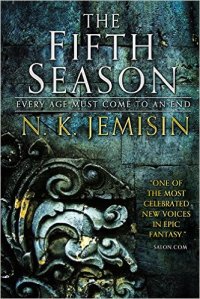 The Fifth Season (The Broken Earth #1), by N.K. Jemisin – I don’t know how to describe this book without going on for paragraphs and paragraphs, giving away the story, or both… but I’ll try. The Stillness is a vast continent that is plagued by seismic events – earthquakes, tsunamis, disasters of all stripes. Resident on the Stillness, amongst the ordinary “stills,” is a race of people called “orogenes,” who can sense and control the geologic environment. The orogenes are feared and hated for their powers, but the stills also need their skill, and so the entire group has been suborned to the point of slavery – until a few orogenes decide that they’ve had enough. I don’t want to say any more, because I don’t want to risk spoiling the many surprises. The Fifth Season was my first N.K. Jemisin experience, and I was incredibly impressed with her world-building and her beautiful writing. I’ll be reading her entire backlist now, kthanksbye.
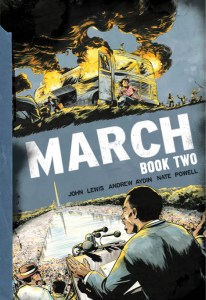 March: Book Two, by John Lewis – I couldn’t leave March this month, so I returned to Congressman Lewis’ memoirs for the second volume. The Congressman finds himself in more and more volatile of a situation as he assumes a leadership role, first in the Freedom Rides, and then in SNCC, the nonviolent student organization he helped to found. The volume concludes with the March on Washington and Dr. Martin Luther King’s “I Have a Dream” speech, and it is incredibly moving and powerful. What a wonderful way to tell such an important story – everyone should read March. I’m now impatiently waiting for the third and final volume.
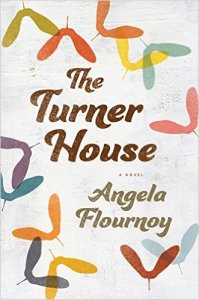 The Turner House, by Angela Flournoy – The Turner house stands on Yarrow Street in a crumbling Detroit neighborhood. For years, the house has sheltered Francis and Viola Turner and their thirteen children, from Cha-Cha, the responsible eldest son, to Lelah, the baby of the family. Now Francis has passed away and Viola is dying. The house – all but abandoned – is only worth about $4,000, but Viola still owes $40,000 on it. Against this bitter backdrop, the Turner children gather to debate what should be done with their family home. As the discussion unfolds, the children deal with their own private dramas. Cha-Cha believes that he is being haunted, and the “haint” is causing both Cha-Cha and his marriage to unravel. Twelfth child, Troy, is determined to buck his elder brother and take the house’s fate into his own hands. And Lelah, the youngest, is coming undone – evicted, recently backslid into a gambling addiction she had worked hard to break, and at odds with her only daughter. I loved this book. Each of the Turners felt so real – the characterization was absolutely masterful. Cha-Cha, in particular, was such a wonderful character, and I rooted for him to confront both his haint and the pressures of being the new family patriarch. I simply can’t believe that The Turner House is a debut novel – if this is Angela Flournoy’s first effort, I can’t wait to see what she does next.
 covered in flour