Septemb-Eyre: Chapters XXX-End

jane_eyre_large

Rachel: I can’t believe you let me go on and on like that!
Phoebe: I’m sorry.  It was just so funny when you started comparing Jane Eyre to Robocop.

Heh.  I had to allow myself one last giggle.  Okay, straight to it, and as always, a warning: for those who have not read Jane Eyre and don’t want to know what happens, beware!  Major plot spoilers ahead – like, I’m going to spill the beans on the ending.

Synopsis

When we left Jane, she had been taken in, sick and starving, by the residents of Moor House, an isolated but welcoming place.  As she recovers her health, she gets to know the inhabitants – St. John Rivers, a clergyman, and his two sisters Diana and Mary – and the better she knows them, the more she likes them.  Diana and Mary soon regard her as a close friend and St. John is impressed enough with Jane’s various accomplishments that he offers her the position of mistress of the village school.  Jane accepts the job and begins her new post immediately.  At first, she doesn’t care for the work of teaching “rustics,” but she and her students soon develop a connection, and Jane is happy.

Jane’s mental quiet doesn’t last long, however.  A moment of thoughtless doodling on her part leads St. John to discover her real identity – which she has previously concealed – and he then drops a bombshell: Jane’s uncle in Madeira has died and left her his entire fortune, some twenty thousand pounds.  Oh, and more – St. John, Diana and Mary are her cousins, the other nieces and the nephew of the deceased uncle, who have been cut out of the will.  Jane’s sense of justice won’t allow her to inherit a fortune while her cousins receive nothing, so she persuades them to allow her to split the fortune into four equal parts – five thousand pounds for each of them.  (Still a lot of money, but not a crushing burden of wealth the way twenty thousand would have been.)  Jane then moves out of the school house and back to Moor House, where she is determined to have a nice vacation with Diana and Mary.  St. John, however, has other ideas.  (Evidently, vacations are sinful!)  Although he is in love with the local heiress Rosamond Oliver, he proposes to Jane, who in his view was built for labor, not love, and would therefore make an ideal missionary’s wife.

Jane’s passionate nature abhors the idea of marrying without love.  She offers to accompany St. John on his planned mission to India, but as his sister or curate – not his wife.  St. John refuses the offer and says she can only come with him as his wife.  Jane insists that she’d be happy to become a missionary, but that she cannot marry him.  St. John presses the issue and makes a bit of a pest of himself (in my opinion), but Jane is on the verge of yielding when she hears a voice calling out to her: “Jane!  Jane!  Jane!”  The voice… is Mr. Rochester’s.

Jane has tried to bury her feelings, but even so, she continues to feel anxiety over Mr. Rochester.  Has he succumbed to temptation and gone back to the Continent to drown his sorrows in mistresses, as she was afraid he would do?  Jane decides to go herself to Thornfield and make inquiries, since her letters have all gone unanswered.  Only when her mind is at ease concerning Mr. Rochester’s fate can she decide whether to marry St. John or not.  Jane rushes back to Thornfield, but… she finds it a ruin of ashes and stone.  The great hall has been destroyed in a fire, and the inhabitants are nowhere to be seen.  Jane hurries to the Rochester Arms inn and asks what happened.  The publican gives her the whole story, in which she herself plays a villain’s role, not realizing that it is “the midge of a governess” to whom he speaks.  The answer, then: crazy Bertha escaped her guardian, Grace Poole (who, it turns out, likes a sip of gin now and then) and set fire to the place, then threw herself off the roof.  No one else was killed, but Mr. Rochester – now a widower, incidentally, and eligible to remarry – lost a hand and one eye, and was blinded in the other eye.  He’s living at his damp and desolate hunting estate, Ferndean, with only two long-time family servants.

Jane rushes to Mr. Rochester’s side.  At first, she seems to have a hard time convincing him of her corporeality.  But he soon accepts that she’s real, she’s present, she’s not marrying St. John Rivers, and she wants nothing more than to become Mrs. Rochester after all.  And so, Reader, she marries him.  And, if you have any doubt in the happy ending: he gets his eyesight back, and a baby son into the bargain.  And they all live happily ever after.

Thoughts

If the last two sections of the book have been action-packed, this final section, until the very end, seems to slow back down to the pace of the childhood and school section in the very beginning.  Jane’s tenure at Moor House is probably my least favorite aspect of the book; it drags for me, just a little bit, and while I adore Diana and Mary, St. John is cruising for a bruising.  But it all comes out right in the end!  St. John goes off on his mission, without Jane, Diana and Mary get married and are loved and remain close to Jane all their lives, and Jane gets to be happy, finally, with Mr. Rochester.

It’s really only the end of the book where I think that Jane and Edward (I can use his first name now, because Jane can) have really found love with each other.  Before, as I’ve said, there’s a great deal of infatuation on Jane’s part, and Edward all but admits that he mostly wanted to marry Jane as a change from the crazy witch he’s been locked up with for fifteen years.  But when Jane returns to Edward, a rich and independent woman, and is in the position of choosing her role as his helper, and when Edward has had a taste of what it’s like to be the dependent one, they can actually love each other as equals for the first time – and they do.  Jane needs to taste independence before she can really love another person (more subversiveness!) and Mr. Rochester needs to come down a peg or two before he’s capable of knowing what he has.  In their case, absence certainly does make the heart grow stronger, and it puts them in a position of enjoying a marriage of equals, which is what they both need.

I’ve always said that Jane Eyre is my favorite book, but that it had been too long since I’d read it through.  Well, after reading it again with fresh eyes for Septemb-Eyre… it’s still my favorite book.  In fact, I love it more than ever.  I love Jane’s independence, her resolute determination to do the right thing not because society expects it of her, but because her own self-respect demands it.  I love Mr. Rochester’s flaws and his faults and the deep love he comes to feel for Jane.  I love kindly Mrs. Fairfax and effervescent Adele and the wonderful Diana and Mary Rivers.  I love all of these characters, and I love the setting – the brooding Thornfield Hall, with its split lightning-struck tree and its serene, otherworldly orchard where so much romance happens.  Yes, Jane Eyre is still my favorite book… and I won’t let so many years pass between this and the next re-read.

If you’ve been reading along with Septemb-Eyre, I hope you’ve enjoyed yourself as much as I have!  Kerry, thanks for hosting; this was a great way to spend my reading time this month.  I’m submitting this post as my “review” of Jane Eyre for the Classics Club.

Jane Eyre, by Charlotte Bronte; buy the book here (not an affiliate link) or support your local libraries and indie bookstores.

Peanut’s Picks: JANE EYRE

Peanuts Picks Lets Read

So, there are a lot of things that adults do that I don’t understand.  Like, for example, why does Mommy walk around all day drinking out of a cup and then when I try to share, she snatches it away and says, “No, honey, that’s too hot!” – what is that about?  If it’s too hot, then why are you drinking it?  And if it’s not too hot, then why aren’t you sharing?  Sharing is caring, remember?  I share with you every time I lick my hand and then wipe it on your face.  Would it kill you to practice what you preach?

Another thing I don’t understand: why does Daddy watch that show for hours every Sunday?  You know the one I mean?  The one where everyone is always running around on the striped grass and clunking heads and falling down?  And it lasts for, like, a month and a half?  I don’t get it.  (Mommy doesn’t get it either.)

But one thing that Mommy does that I do understand is reading books over and over again.  I always like to read my books over and over again.  Especially my favorites, like Tumble Bumble (I like the part about HOORAY!) and Bear Snores On (I like when the bear sneezes SPOILER ALERT).  I especially like it when Mommy lets me turn the pages.

Anyway, Mommy’s favorite book is Jane Eyre.  I know this because I have my own copy that we read ALL. THE. TIME.

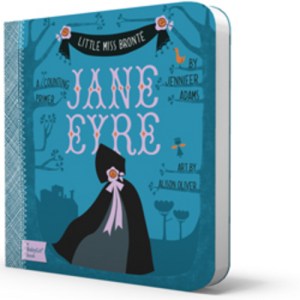
BabyLit Jane Eyre

This is a very interesting book.  It is about one governess (Jane) who has two trunks.  She lights three candles, which is dangerous.  (Mommy won’t explain why, though, because she says it would take too long.  Silly Mommy.  If it takes too long I’ll just cry or go to sleep on you, whatever.)  She lives in a place called Thornfield Hall, which has four towers.  I forget the rest.

storytime

This is me when I was little. LOOK AT ME READING.

Oh, right, and she teaches Adele with six chalkboards, which seems excessive to me.

Anyway, I really like this book because I like that there is a bird on every page and Mommy points to them for me and then I get to turn the pages, which is great.  But I noticed that my Jane Eyre book doesn’t look like Mommy’s Jane Eyre book.  Like, where are the bird pictures in Mommy’s book?  There are no pictures in Mommy’s book.  And she won’t let me turn the pages.  What gives?  Mommy says that we’re both reading Jane Eyre, but I think she’s just pretending.  LOL, Mommy pretending.

E Reading JE

Lesson for parents: My book is better than yours.

Mommy says that if you want to buy the book, you can get it here or support your local indie bookstore.  Also, make sure you get the one with pictures, because the other one is boooooooooooring.

Great Falls

Before we left DC, we tried to go on a sightseeing binge and return to as many of our favorite places as we could pack in, reasonably speaking (we are slaves to naptime, after all).  That meant returning to the Torpedo Factory for a few last browsing sessions, stopping by favorite restaurants and cafes, and many, many London Fogs for me at my favorite coffee shop.  (Oh, they’re going to miss me, for sure.)  One place that I knew I had to visit one more time was Great Falls National Park.  We’ve had many a happy hike here, and I could stand all day, just drinking in this view:

gf1

We’ve done this hike in every season.  We’ve done it in the heat of summer, like this most recent visit, we’ve done it under arbors of turning leaves, in six inches of snow, and amidst new buds.  I love it every season, and there’s something different and special about Great Falls each time we go.  It’s my favorite hike in the DC area, and possibly my favorite hike in the world (although Buttermere, in the English Lake District, and Point Reyes, in California, might give Great Falls a run for its money).  I’ve been wanting to show this wonder to Peanut for months.

gf2

Come to think of it, I’m not sure how much she actually saw.

We had a blissful time, though.  We climbed over rocks, carefully (hubby especially carefully, since he had a wee one strapped to him), goggled at the view, and generally drank in the spectacular scenery.

gf3

I’m sure that I’ll be back.  I plan on making plenty of return visits to DC, as often as I can, and I love Great Falls too much to say goodbye forever.  I truly believe this is one of the most beautiful places on Earth, and I’m so lucky that I got to live near here for a chunk of my life, and to spend so many happy afternoons hiking here.  And I’m sure that, whether it’s here or someplace else, I have many afternoons of hiking ahead of me.  After all, I have the two best hiking buddies a girl could ask for:

gf4

Love those two.  Happy trails!

Septemb-Eyre: Chapters XXII-XXIX

jane_eyre_large

I’ve been following along with others’ progress on Twitter and via other blogs, and it’s gotten harder and harder to keep mum about the big surprises in this book, especially because the more I read, the more I remember all the reasons why Jane Eyre is my all-time favorite book.  And this section reveals the biggest plot twist of all… so let’s get right to it.  (Warning, as always: spoilers ahead.  If you haven’t read Jane Eyre and don’t want to be exposed to major plot spoilers, come back on Wednesday for a non-Jane post.)

Synopsis

Jane stays at Gateshead for a month, first at the request of her cousin Georgiana, and then at the request of her cousin Eliza.  Once Eliza and Georgiana have both departed to their own futures, Jane is free to return to Thornfield and she does so, reflecting on the way that she has never had the experience of coming “home,” before, and she feels great joy at returning to Thornfield, even though it is not really her home, or it won’t be for long – since she remains committed to her plan of seeing Adele off to school and then departing herself for another situation as soon as Mr. Rochester marries Miss Ingram.

But maybe Thornfield is to be Jane’s home after all!  Shortly after her return, one evening, Mr. Rochester tracks her down in the orchard and professes his love for her.  This is one of my favorite scenes in the book – even knowing what’s to come – because it includes so many of my favorite quotes.  So many of Mr. Rochester’s smoldering, wildly romantic declarations, and so many of Jane’s spirited declarations of independence, even as all of her dreams are nearing fulfillment and she is finally allowed to believe that she may one day become Mrs. Rochester.

The next day, Mr. Rochester takes Jane shopping and attempts to shower her with jewels and expensive dresses, betraying that he doesn’t yet quite understand her personality.  Still, Jane’s happiness extends a full month, as the wedding preparations are made.  In that time, she endeavors to bind Mr. Rochester to herself – her real self – mainly by teasing him.  (It seems to work.)  Only one encounter mars her serenity: one night, shortly before the wedding, she awakens after two nightmares to find a ghoulish figure in her chamber.  The figure looms over her, leering, and rips Jane’s expensive wedding veil in two.  It is a figure Jane doesn’t recognize – it’s not anyone she has seen in Thornfield Hall before.  When she reports the incident to Mr. Rochester, he convinces her that the intruder was Grace Poole – despite Jane’s proclamation that it was a stranger – and that Jane’s vision of a large, ghoulish figure was actually the result of a nightmare assigning Grace features she doesn’t have.  Jane accepts Mr. Rochester’s explanation, but she is still uneasy and has a difficult time envisioning herself as “Jane Rochester.”

On the morning of the wedding, Mr. Rochester rushes everyone off to church and the ceremony begins amid inexplicable haste.  The hurry is soon explained, however, when two men stand up and declare an impediment to the marriage.  {Major plot spoiler!}  Mr. Rochester, it seems, is already married.  His wife, the sister of his “friend” Mr. Mason, is a lunatic that he has confined in his attic.  Mr. Rochester first attempts to deny his marriage, but in the face of proof, he concedes that, legally speaking, he is married.  The group returns to Thornfield, heads up to the attic, and confronts the monstrous Mrs. Rochester, who has been guarded all this time – although sometimes not very securely – by Grace Poole.  Mr. Rochester appeals to the pity of his witnesses, and admits that he wanted to marry Jane, mainly, as a change from the rage-fueled maniac the law considers his wife.

After processing the situation, Jane realizes that she must leave.  Mr. Rochester obtains one final conversation, in which he pleads with her to stay and live with him, or to live in one of his French villas, or anything other than leave him – but Jane is firm.  As much as she cares for Mr. Rochester, she cannot stay and be his mistress against the laws of the land, society, and her religion.  He points out that she has no friend or relation who will worry or feel offended if she chooses to follow her heart in defiance of the law – and then comes one of my favorite parts, and please excuse me for quoting it:

This was true: and while he spoke my very conscience and reason turned traitors against me, and charged me with crime in resisting him.  They spoke almost as loud as Feeling: and that clamoured wildly.  “Oh, comply!” it said.  “Think of his misery; think of his danger – look at his state when left alone; remember his headlong nature; consider the recklessness following on despair – soothe him; save him; love him; tell him you love him and will be his.  Who in the world cares for you? or who will be injured by what you do?”

Still indomitable was the reply – “I care for myself.  The more solitary, the more friendless, the more unsustained I am, the more I will respect myself.  I will keep the law given by God; sanctioned by man.  I will hold to the principles received by me when I was sane, and not mad – as I am now.  Laws and principles are not for the times when there was no temptation: they are for moments such as this, when body and soul rise in mutiny against their rigour; stringent are they; inviolate they shall be.  If at my individual convenience I might break them, what would be their worth?  They have a worth – so I have always believed; and if I cannot believe it now, it is because I am insane – quite insane; with my veins running fire, and my heart beating faster than I can count its throbs.  Preconceived opinions, foregone determinations, are all I have at this hour to stand by: there I plant my foot.”

In that moment, Jane makes the decision that even if no one else loves her, she loves herself enough not to enter into a relationship that would degrade her.  (Yeah, Jane!)  But she pays for that decision – because along with it comes her conviction that she has to leave Thornfield as soon as possible, before her will is tested beyond her capacity to resist.  She steals away in the night, spends all her money on a coach ride as far from Thornfield as she can get, and is reduced to begging for food.  Turned away everywhere, starving nearly to death, she finally collapses at the doorstep of a house, and the residents – St. John Rivers and his two sisters, Mary and Diana, take her in and nurse her back to health.

Thoughts Thus Far

Sorry for the long recap, but a lot happens in this installment!  First of all, the biggest surprise of the book: it turns out that Miss Ingram is the least of the obstacles to Jane’s happiness with Mr. Rochester, because the creep is already married!  Okay, when you hear his story, it’s easy enough to sympathize with him – forced into a marriage he doesn’t want, with a woman whose family manages to conceal their tendency toward mania, he at least tries to do something right after his wife goes off the deep end four years into their already-unhappy marriage.  Rather than abandoning Mrs. Rochester, or condemning her to death by dampness at one of his less-well-kept homes, Mr. Rochester keeps her alive and as safe as he can in his attic.  (LOLWUT?)  Of course, while Mrs. Rochester might be safe, no one else is while she’s under his roof – setting people’s beds on fire, biting and stabbing visitors (like her brother), and taking out her rage on helpless wedding vows.  So, yes, I do feel kind of sorry for Mr. Rochester.  But not so sorry that I would want Jane to stay with him in this situation.

What I really want to talk about, though, is the subversive nature of so many of Jane’s revelations in this section.  She’s already declared herself to be the equal to or the superior of Miss Ingram (and, of course, when it comes to matters of intellect and ethics, she’s completely correct on that point).  In accepting Mr. Rochester’s marriage proposal, she also bluntly tells him that she’s his equal – regardless of the difference in their “stations.”  (Mrs. Fairfax brings Jane back to earth with a thud when she reminds her that “Gentlemen of his station are not accustomed to marry their governesses.”)  It is Jane’s ambiguous class (educated, daughter of a clergyman, well-read and well-spoken, but still a governess and an economic dependent) that allows her to make these observations of the relative stature of classes, but it’s easy to see how this could have gone over like a lead balloon to certain elements of nineteenth-century British society.

Then, there’s Jane’s attitude toward God and religion, which is equally subversive.  For example, she refuses to disobey “God’s law” and become, in effect, Mr. Rochester’s mistress.  But she doesn’t come to this decision because she has any fear of society’s judgment, nor does she accept “God’s law” as infallible just because it is “God’s law.”  Rather, she observes the law because it is what her own self-respect requires of her – not out of any deference to the society that laid down the law.  And her position on houses of worship is no better: during her flight from Thornfield, Jane stops to ponder how much more spiritual she feels when surrounded by nature than in a traditional church setting (and, again, please pardon the quote, but it’s so good I have to show you):

We know that God is everywhere; but certainly we feel His presence most when His works are on the grandest scale spread before us; and it is in the unclouded night-sky, where His worlds wheel their silent course, that we read clearest His infinitude.

I can’t imagine that view was all too popular with the clergy back in 1847 either.

When I’ve read this book in the past, it’s always been for the romance.  Mr. Rochester’s smoldering gaze, his declarations of love for Jane (on this reading, I’m thinking that although she may be infatuated and he may be attracted to and entertained by her, neither of them has quite experienced real, lasting love yet), and the tragic obstacles that spring up between them – these were the things that stood out to me.  This time, it’s the subversiveness of the book: Jane’s quiet determination to act in accordance with her personal ethics, her refusal to enter into a relationship that compromises her self-respect, her disdain for her “social betters” if she they are not her intellectual or ethical equals.  I just keep coming across passage after passage like this, and remarking to myself, “No wonder this book upset so many people!”  I’ve always loved Jane for her spunk and determination, but it’s only on this re-read that I’m really reading slowly enough to ponder the social obstacles she faced or the potential costs to her in adhering to her personal ethics.  Her individualism and courage are what’s speaking to me this time, and I’m loving the book even more for it.

Are you reading along with Septemb-Eyre?  What did you think of this section?

Peanut’s Birthday Book Haul

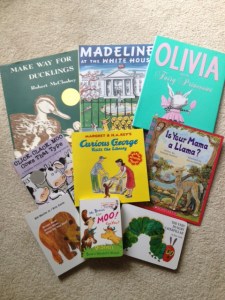
I can’t believe it’s been almost a month, and I’ve neglected to show you the book haul Peanut pulled in over her birthday week!  I have to say, she did extremely well for herself.  In my quest to raise a reader, I’ve showered her with books from day one (I buy her plenty as just-because presents, since I don’t want her to grow up thinking that we only get books to read on birthdays and Christmas), but even I can see that I went a leetle bit overboard this time.  And you can add that to the fact that she’s surrounded by family and friends who also love to read and give books, and… well… she’s got enough reading material to last her at least until Christmas.  Maybe.

books1

Books from Family and Friends:

Make Way for Ducklings
Madeline at the White House
Olivia and the Fairy Princesses
Click Clack Moo: Cows that Type
(n.b. This book is AWESOME!)
Curious George Goes to the Library
Is Your Mama a Llama?
Brown Bear, Brown Bear, What Do You See?
Mr. Brown Can Moo!  Can You?
The Very Hungry Caterpillar

books2

Books from Mommy and Daddy

Tiny Pie
Tea Rex
Olivia
Goldilocks and the Three Dinosaurs
Go Dog Go
Indestructibles: Frere Jacques
Indestructibles: Hickory Dickory Dock
Wuthering Heights: A BabyLit Weather Primer
Sense and Sensibility: A BabyLit Opposites Primer
On My Leaf

I’m sort of obsessed with Tea Rex.  And Tiny Pie.  And the BabyLit books.  And…

What is your favorite children’s book?

Bookish A to Z Survey

AtoZsurvey-1017x1024-297x300

I saw this posted on Friday, on Kim’s blog, Sophisticated Dorkiness.  (Originally, it came from Jamie of The Perpetual Page-Turner.)  I love surveys, and this one looked especially fun and creative, so here goes:

Author you’ve read the most books from: L.M. Montgomery, for sure.  Eight Anne books, three Emily books, two Story Girl books, and a smattering of others.  I’ve read them all multiple times.  I’ll never get enough Maud.

Best Sequel Ever: Like Kim, I’m not sure I can crown a “best ever.”  But I did think that Bring Up the Bodies (Wolf Hall Trilogy, #2), was spectacular.

Currently Reading: Savoring Jane Eyre for #Septemb-Eyre, and I’m also in the middle of Anne of Windy Poplars, the fourth book in the Anne of Green Gables series, which I’m re-reading (and loving as much as ever).

Drink of Choice While Reading: Tea, most of the time.  Occasionally I’ll curl up with a book and a glass of red wine in the evening.

E-reader or Physical Book? Most of my reading is done with physical books, and I do like the sensation of turning pages (and the ability to flip ahead and see how far I have to go in a chapter… yes, she says shamefacedly, I do that).  But I love my Nook for traveling.

Fictional Character You Probably Would Have Actually Dated In High School: Hmmmm, this one’s tough.  I think for sure I’d have felt drawn to the teenaged Sirius Black, but would he have been interested in me?  Not sure.  I’d probably have ended up with Lupin.

Glad You Gave This Book A Chance: I resisted for awhile, but by the time Harry Potter and the Goblet of Fire was released, I was tired of being what felt like the only one not in the loop, so I picked up the first in the series and never looked back.

Hidden Gem Book: I feel like no one reads Time and Again, by Jack Finney, and everyone should.  It’s so much fun.

Important Moment in your Reading Life: The summer before ninth grade, my parents grounded me for something and forbid me to read any books except for “classics,” for one week.  I had to read, obviously, so I picked up To Kill a Mockingbird.  That was the book that taught me that I could hang in there with an adult classic, learn something, and have a wonderful time.  I started gravitating toward classic literature after that (and away from the Baby-Sitters Club, although I still love and re-read my true childhood favorites, like L.M. Montgomery’s Anne, Emily and Story Girl books, or Laura Ingalls Wilder’s Little House series).

Just Finished: Oryx and Crake, by Margaret Atwood.  I couldn’t be the only person out of the loop on the MaddAddam trilogy.

Kinds of Books You Won’t Read: I don’t really go for science fiction, in general (although I’ll make exceptions for classic dystopia), for new adult romance, or for horror (although, again, I’ll make exceptions for a true classic).

Longest Book You’ve Read: I’m not sure, exactly, but I think probably War and Peace, by Leo Tolstoy.  The translation by Richard Pevear and Larissa Volokhonsky.

Major book hangover because of: The Hunger Games, by Suzanne Collins.  I really couldn’t figure out what to read after that.  (The first one.  After reading the cliffhanger ending in Catching Fire, I knew exactly what I had to read next: Mockingjay.)

Number of Bookcases You Own: Nine (counting the two built-ins in our current rental), but they’re not all in use at the moment.  We’re only planning to be in this house for a year, before we intend to buy something.  So I’ve done some major culling of the book collection and only kept out my absolute favorites – enough to fill the two built-ins and my “Librarie shelf” from Ballard Designs (formerly in my reading nook), and nothing more for me.  Between those and the library, I should be fine for a year.  Peanut also has her bookshelf set up.

One Book You Have Read Multiple Times: Jane Eyre, by Charlotte Bronte – my favorite book of all time.  I’m re-reading it (again) right now for #Septemb-Eyre.

Preferred Place To Read: It was the seating alcove in my old bedroom, which I turned into a reading nook.  But sadly, it’s now someone else’s seating alcove.  I suppose my current preferred reading location is on the couch, snuggled up with a cup of tea or a glass of wine while hubby is watching football next to me, and Peanut is snoozing happily upstairs.

Quote that inspires you/gives you all the feels from a book you’ve read: Professor Dumbledore is always inspiring.  He has so many quotes about choices: for example, “It  is our choices, Harry, that show what we truly are, far more than our abilities.”  I think we would all do well to keep that one in mind.

Reading Regret: I thought the Tunnels series was going to be great, so I asked for a copy of the first book several Christmases ago.  What a waste of time.  And a waste of hubby’s money on a hardcover book I donated at the first opportunity.

Series You Started And Need To Finish (all books are out in series): I need to get through the second and third books in the MaddAddam trilogy.  Oryx and Crake was incredibly disturbing and upsetting, but I’m hooked now.

Three of your All-Time Favorite Books: Jane Eyre, by Charlotte Bronte; Pride and Prejudice, by Jane Austen; The Master and Margarita, by Mikhail Bulgakov.  There are more – many more – but these are probably the top three.

Unapologetic Fangirl For: Jane Austen.

Very Excited For This Release More Than All The Others: The third novel in Hilary Mantel’s Wolf Hall trilogy, for sure.

Worst Bookish Habit: I always mean to read more books from my own shelves, but then I go crazy at the library.  I’m like a kid in a candy store at that place.  I have no willpower.

X Marks The Spot: Start at the top left of your shelf and pick the 27th book: Just So Stories, by Rudyard Kipling.

Your latest book purchase: Everyman’s Library omnibus edition of Flaubert’s Parrot and A History of the World in 10 1/2 Chapters, by Julian Barnes.  Purchased from Kramerbooks in Washington, D.C.

ZZZ-snatcher book (last book that kept you up WAY late): Oryx and Crake, by Margaret Atwood.  So weird and disturbing, but I had to know what was going to happen.

That was fun!  Thanks for coming up with the survey, Jamie, and thanks for posting, Kim!

Septemb-Eyre: Chapters XII-XXI

jane_eyre_large

Another week gone by!  How has everyone’s reading been?  This was an eventful installment, so I’ll get straight to it.  (Warning: spoilers ahead.)

Synopsis

When we left Jane, she was just settling into life at Thornfield, teaching young Adele by day and making small talk with the kindly housekeeper, Mrs. Fairfax, in the evenings.  Already, however, Jane is getting restless.  She had hoped that Thornfield’s proximity to a larger town would bring her some change or interest, but she’s just as much a recluse there as she was at Lowood – that is, until one day when she decides to walk to the post office and encounters a large dog and a man on horseback.  The man rather awkwardly falls off his horse and then questions whether Jane is a woodland fairy who spread the ice beneath his horse’s hooves.  (Answer: NO.)  This rather clumsy, awkward gentleman turns out to be none other than Mr. Rochester, master of Thornfield.

Jane and Mr. Rochester quickly establish a bond.  Mr. Rochester, for his part, seems to enjoy Jane’s company.  He likes to talk, and she likes to listen, and he enjoys her bluntness – when asked whether she finds him handsome, for example, she quickly (and unthinkingly) responds, “No, sir.”  Jane’s feelings for Mr. Rochester rapidly change from polite interest to warmth and then to love – or at least, infatuation – one night.  Jane awakens in the night to hear the weird, demonic laughter that she has periodically observed, and which Mrs. Fairfax has told her is the household seamstress, Grace Poole.  The laughter, this time, is not coming from the attics, but from the hallway right outside Jane’s room.  Fearing some danger, Jane rushes to Mr. Rochester and finds his bed ablaze.  She wakes him up and he escapes the flames unharmed, gives Jane one compliment on her eyes, and she’s in love.

The morning after the fire, Jane is astonished to discover two things: Mr. Rochester is gone, and Grace Poole still works there.  Mr. Rochester has made her promise not to mention anything about Grace in connection with the fire, and she’s as good as her word.  Meanwhile, Jane’s infatuation for her employer grows in his absence, until he returns with a large party of local ladies and gentlemen, including the tall, striking, and snobbish Blanche Ingram, believed by everyone to be his intended bride.  Mr. Rochester asks Jane to join the group in the evenings and she does so – even while being snubbed by the women and feeling heartbroken at the prospect of seeing Mr. Rochester married to Miss Ingram.

On one of the last nights of the party, a stranger named Richard Mason arrives at Thornfield and asks to see Mr. Rochester.  He’s not there, having gone off “on business” to a nearby town and returned in disguise as a gypsy woman to have some sport of the ladies.  Jane, suspecting a trick, is guarded in what she says to the “gypsy.”  She’s shocked to find that the “gypsy” is Mr. Rochester, however – she’d been expecting Grace Poole to reveal herself – and further heartbroken by hearing the “gypsy” Mr. Rochester give credence to the rumors that he plans to wed Miss Ingram.  Jane will, however, have another opportunity to prove her devotion and discretion that night, when Mr. Mason is viciously attacked.  Believing his assailant to be the murderous Grace Poole, Jane keeps a silent vigil at Mr. Mason’s bedside while Mr. Rochester rides for a surgeon.  Mr. Mason is smuggled out of Thornfield the next morning, and Grace Poole remains at her post.

Jane leaves the estate shortly thereafter, having been summoned back to Gateshead at the request of Mrs. Reed, who is dying.  (And John Reed, he of the book-throwing, is already dead, and mourned by no one except his mother.)  Jane arrives at Gateshead to a frosty welcome from her cousins Eliza and Georgianna and waits some time before Mrs. Reed is coherent enough to speak with her.  When she finally gains her audience, Jane learns that three years prior, Mrs. Reed had received a letter from one of Jane’s Eyre relations, who had made his fortune and wished to adopt Jane.  Rather than seeing Jane comfortable and cherished, the spiteful Mrs. Reed informed Mr. Eyre that Jane had died in the typhus outbreak at Lowood.  Jane, proving herself (again) to be made of better stuff than her aunt, forgives Mrs. Reed and comforts her on her deathbed.

Thoughts Thus Far

What a week of reading!  This set of chapters brought one event after another.  The entry of Mr. Rochester on the scene – Jane falling in love – two attempted murders – a large party – a deathbed confession.  My head is spinning, as it always is when I get to this part of the book.  It makes quite the change from the early chapters, in which nothing seems to happen and in which Bronte ruminates on one day or one event for chapters at a time.

A couple of things that I’d like to mention: first of all, Mr. Rochester’s appearance is one of my favorite entrances by a leading man in all of literature.  No striding confidently into a room for he.  No, and no smoldering glances by the fireside, either, while the heroine catches her breath in her throat in the doorway.  No, this literary hero makes his grand and dramatic entrance by… falling off a horse.  I love that.  Let no one accuse Charlotte Bronte of being humorless.

Of course, the hero’s clumsy entrance also serves to humble him a little bit, so that the reader isn’t completely incredulous at how quickly Jane becomes his companion – his “little friend,” as he calls her.  A governess normally wouldn’t find herself sitting beside the master of the house for hours on end, listening to him ruminate about his various failings (a favorite topic of Mr. Rochester’s).  But then, Thornfield is a small establishment – it’s a big house, but run by a small group of servants since the master is so rarely present – and as a result, Mr. Rochester fits right into the tight-knit little group.  At least, he does until Miss Ingram and company arrive, and then Jane is quickly and sharply reminded of her real status.

Another thing I noticed on this reading was how quickly Jane becomes infatuated with Mr. Rochester.  For his part, he seems entertained by her and he certainly trusts her.  But after one dramatic evening (okay, she did save his life) and one compliment about he eyes, Jane believes herself to be in love.  Is she really?  I doubt it.  At this point, I think she’s just infatuated.  To put it bluntly, she’s got quite the crush.  But I think it’s the effect of her emotionally starved childhood that causes her to mistake a crush for love, and one compliment for the possibility of reciprocation.  Of course, we still have plenty to read…

Have you been reading along with Septemb-Eyre?  Did you enjoy this whirlwind set of chapters?

The Buffalo List

ry=400

Ever since we officially decided to move to Buffalo, I’ve been working on a list of things to do once we get there.  Some are things that we’ve done before (since we’ve been visiting my in-laws in the area for the past ten years, and hubby lived there before that), and others are new ideas that I’ve come across in reading Visit Buffalo Niagara or surfing various Buffalo blogs.  I’m going to keep track of our progress via the new Buffalo tab at the top of my blog, so feel free to follow along as we explore Buffalo and the surrounding region.

In the City

1.  Cheer on the Sabres at First Niagara Center – as often as possible!

2.  Run the Buffalo-Niagara YMCA Turkey Trot (again; I ran with my sis-in-law back in 2011).

3.  Attend Shakespeare in the Park (again; hubby and I did this many moons ago when he lived in Buffalo).

4.  Climb at Silo City Rocks.

5.  Attend Holiday Pops and classical music concerts at Kleinhans.

6.  Have dinner at Rue Franklin (again – yum).

7.  Volunteer with Literacy New York – Buffalo-Niagara.

8.  Join a moms’ group in my neighborhood.

9.  Take Peanut to the Buffalo Zoo and the Explore & More Children’s Museum.

10.  Kayak Canalside.

11.  Attend First Fridays and the Allentown Art Festival.

12.  Visit the Albright-Knox Museum (again).

13.  Explore the Erie Canalway and the Scajacquada bike routes.

14.  Check out the Olmstead park system.

15.  Attend the Taste of Buffalo food festival (next summer, since 2013 has already happened).

Surrounding Areas

1.  Take hubby to Aurora Brew Works for a belated anniversary celebration.

2.  Tour every Frank Lloyd Wright-designed house in the greater Buffalo region.

3.  Take Peanut swimming in Lake Erie.

4.  Visit every winery on the Niagara Wine Trail.

5.  Have a playdate with a friend who lives in the ‘burbs.

6.  Bike to Akron, NY.

7.  Niagara Falls, obviously.

8.  Work our way through the “50 Hikes in Western New York” book.

9.  Visit the Roycroft campus.

10.  Go snowshoeing!

Farther Afield

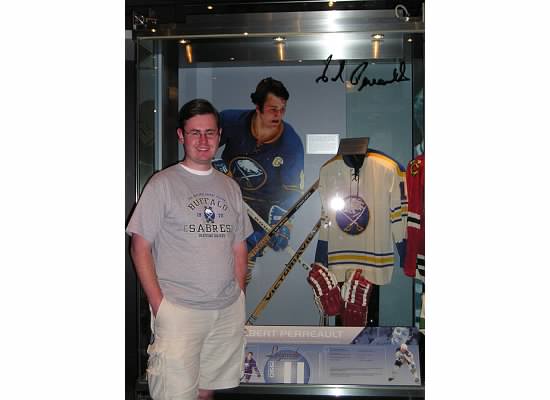
1.  Make another trip to the Hockey Hall of Fame in Toronto.

ry=4002

2.  Spend a weekend in Niagara-on-the-Lake.

3.  Become Adirondack 46’ers.

4.  Take Peanut to visit Cornell, her future alma mater.

5.  Road-trip through the Eastern provinces of Canada.

Buffalo family and friends: any other suggestions for must-do activities in the area?

WHERE’D YOU GO, BERNADETTE

bernadette cover

Bernadette Fox is brilliant.  She’s a reknowned architect and the recipient of a MacArthur Genius Grant.  She’s the beloved wife of a Microsoft executive, and mom to a precocious teenaged girl, Bee.  Bernadette is also a recluse who has withdrawn so completely from society that she outsources her life to a virtual personal assistant in India.  That is, until one day, when Bernadette disappears.

Bee is convinced that – despite what everyone around her believes – her mom wouldn’t just vanish.  She’s sure that Bernadette is waiting for her somewhere, and that all she must do to find her mother is piece together a few clues.  Bee gathers emails, letters, faxes, and articles into a book, which she plans to analyze for hints as to Bernadette’s whereabouts.  It is these items, interspersed with some traditional narration wherever Bee feels the need to fill in a few story gaps, that make up Maria Semple’s charming Where’d You Go, Bernadette.

I waited for months, inching my way up the queue, to get this from the library.  Turns out, I should have just bought a copy to begin with – because I certainly will return to Bernadette’s story again and again.  Bee’s faith in her mother is incredibly touching, and the epistolary structure is one of my favorite literary devices.  Where’d You Go, Bernadette is a sweet, whimsical, and uplifting novel about the love between a mother and daughter, about facing demons and never giving up and believing in your family.  I loved it, and I’d recommend it to absolutely anyone.

Where’d You Go, Bernadette, by Maria Semple – buy it here (not an affiliate link) or support your local indie bookstore.

Septemb-Eyre: Chapters I-XI

jane_eyre_large

Phoebe: Okay, all right, so Jane Eyre: First of all, you’d think she’s a woman, but she’s not.  She’s a cyborg.
Rachel:  A cyborg?  Isn’t that, like, a robot?
Phoebe: Yeah, this book was lightyears ahead of its time.

And the Friends quotes continue!  Okay, before I get into the story, I just want to say: thanks, everyone, for the sweet comments that you all left on my Septemb-Eyre introductory post.  I loved them, I have now approved and replied to them all, and I’m working on getting to everyone’s blogs to leave comments in return.  I really appreciate all of your patience – this move has not gone quite as smoothly as I would have liked it to, and it took me a few days to get my computer up and running.  Even now that I have internet access back, I am finding it hard to get online much, because I’m spending most of my time either entertaining the baby or unpacking.  But I will get around to reading everyone’s introductions in good time, and I can’t wait to see what the rest of my reading buddies thought about the first week’s reading.  I can already tell that this read-along is going to be a lot of fun!

Okay, so, to my thoughts on the first eleven chapters.  (Warning: spoilers abound.  If you’re not participating in Septemb-Eyre and you don’t want to ruin the story, be advised.)

Synopsis

When the book opens, we meet young Jane, a child of around nine or ten years, friendless ward in the home of her late uncle Reed.  Mrs. Reed, her guardian, and the three Reed children are unfriendly, even cruel, to the sensitive heroine.  When Jane finally rises up against her bullying cousin John, she is blamed for the fit of temper he provoked and locked in “the red room,” the chamber where her uncle breathed his last.  Jane, an imaginative child, falls victim to a fit of hysterics when she dreams up her uncle’s ghost – and her fit leads to her being sent away to school, because Mrs. Reed can’t bear to have her around the house anymore.   (Before she leaves, Jane does manage to tell Mrs. Reed exactly what she thinks of the treatment she has received, in a stunningly mature reaming-out.)

Lowood, the school for orphans and friendless girls to which Jane is consigned, seems at first blush to be a harsh, cheerless place.  The food is inedible, and the wash-basin water is frozen.  The school is run by the hypocritical Mr. Brocklehurst, who preaches humility in both behavior and dress, going so far as to chastise one girl for having naturally curly hair, while his gaudy wife and daughters bedeck themselves in satins and ermines and ringlets.  Mr. Brocklehurst uses “Christian piety” to justify depriving the young girls of nutritious food and warm clothing – but the school isn’t completely desolate, despite its governor’s cruelties.  At Lowood, Jane finds a true friend in Helen Burns, and a steadfast, sympathetic heart in the school superintendent, Maria Temple.  The school itself becomes more habitable when a typhus attack decimates the population and causes the donors to demand reforms (and a reduced role for Mr. Brocklehurst).  Jane thrives at Lowood, even after consumption carries off her dear friend Helen, but eight years after arriving there, she decides to strike out on her own when her beloved Miss Temple marries and departs.  Jane advertises her services as a governess and is engaged by Mrs. Fairfax, housekeeper at the imposing Thornfield Hall, to teach young Adele Varens, the ward of the estate’s mysterious owner, Mr. Rochester.  At the close of this chapter in our read-along, Jane has just arrived at Thornfield to a hearty welcome from Mrs. Fairfax, and is getting on well with her young pupil.  But something isn’t quite right: Jane has heard strange, mirthless, tragic laughing in the attic.  Now what could that be?

Thoughts Thus Far

I’ve said many times that Jane Eyre is my favorite book, and that it had been too long since I’d re-read it.  In fact, I hadn’t spent time with Jane in several years.  So far, I’m happy to report, I love the book just as much as I always did – maybe even more.  This first section held new meaning for me now that I’m a mother.  On past readings, I’ve rushed through the first few chapters, blazing by Jane’s childhood and her education at Lowood to get to “the good part” – the part with Mr. Rochester.  (Sigh.)  But this time, I found myself taking my time over the young Jane, and I was heartsick at the way the Reeds treated her.

Since I became a mother, I’ve found myself infusing Peanut into any reading selection that involves a child.  Not so much casting her in a specific role, but thinking, “What if this was my daughter?”  (Anne of Green Gables, which I just finished re-reading, was a prime candidate for this.  I so wanted to gather Anne up in my arms and mother her.  But more on that later.)  I found that, in the case of Jane Eyre, I can no longer read the beginning of the book without feeling hot sparks of anger at the wanton cruelty of Mrs. Reed (what kind of person shakes off and abandons a clearly terrified child?) or the neglect of Mr. Brocklehurst (the fact that there are really people who profit from neglecting orphaned children disgusts me – it always has, but now more than ever).  And I’m even more grateful for the kindness and compassion Jane finds in Miss Temple, who proves herself not only caring, but also brave, and willing to stand up to Mr. Brocklehurst and demand better treatment for the girls.  (Hurray for Miss Temple!  She’s now one of my favorite minor characters in literature.)  My admittedly limited (my kid is one, after all) experience of motherhood is infusing all kinds of new colors and lights into this reading.

Now Jane is happily situated at Thornfield, looking to a brighter future, and I’m glad to be there too.  I’d forgotten the kind bustle of Mrs. Fairfax, and the sweet girlishness of Adele.  Oh, and the creeping chill of that horrible laughter coming from the attic…  And, if you’ll excuse me, I’ve got to get back to it.  It’s about time for one of my favorite literary leading men to ride onto the scene.  Come on, Mr. Rochester!

Are you reading (or re-reading) Jane Eyre this month too?  Are you loving it?