Happy New Year!

Happy 2010!  I’m so grateful for the last several months – starting this blog has been an amazing ride.  Thank you so much to my blogging friends, for the incredibly warm welcome to the food blogging world, and to all of the family and friends who have come out of the woodwork to read about my wine-soaked California trip and my adventures throwing flour all over the kitchen.  I’ve had so much fun cooking and baking for you all, and I’ve even been able to reconnect with some old friends with whom I’d lost touch.  What a gift!  I can’t wait to see what the new year brings, but I’m sure it will involve salad.  (And pie.  I’m all about balance.  Salad.  Pie.  Pie.  Salad.  See?  Balance.)

The best thing about a blog, in my opinion, is that it constantly pushes me to try new and different things, and to experiment with different methods in the kitchen.  In 2010 I plan to finally, finally defeat my fear of yeast breads.  I’ve made several attempts to bake with yeast in 2009.  One attempt was a great success.  The others… not so much.  But next year, armed with my new copy of The Bread Baker’s Apprentice, which I got for Christmas from my mother-in-law (thanks, Mom!), I am going to conquer the world of yeast breads!

And now it’s your turn.  What are you planning to cook and bake this year?

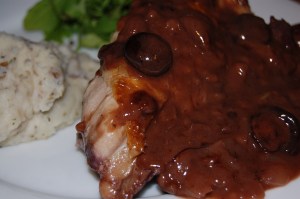
Simple Coq au Vin

Coq au vin is a fantastic dish to make for company.  For one thing, it’s easy and you don’t need to pay all that much attention to it – leaving you more time with your guests.  For another thing, it sounds fancy because it’s French.  Coq au vin is a traditional French dish of chicken braised in red wine (or Riesling, for a fun Alsatian variation).  It is a wonderful, warming, rustic and filling dinner – one of my favorite things to eat in the fall and winter.  Because of the intense flavor of the sauce and the braised chicken, it is also a good meal to prepare for someone who is cutting back on their salt intake.  I recently served coq au vin to several of my family members, including one person who is on a low-sodium diet.  Most dishes are bland and boring without salt, so I turned to coq au vin as a dish that packs enough flavor to make salt almost superfluous – and it worked!  The salt-free coq au vin was so flavorful that the whole family ate the dish without salt and didn’t miss a thing.  Cooking salt-free can be a challenge, but if you keep a recipe for coq au vin in your back pocket, you’ll never be short on flavor.

Coq au Vin

3 tablespoons extra-virgin olive oil
1 chicken, cut into 6-8 pieces
kosher salt (optional) and pepper
2 pints cremini or baby bella mushrooms
3 carrots, cut thinly into rounds
20 pearl onions
1 clove garlic, minced
1 750-ml bottle red wine (Burgundy or American Pinot Noir)
1 cup low-sodium chicken broth
1 bay leaf
2 sprigs fresh thyme (optional)
3 tablespoons flour

  • In a large French oven over medium-high heat, warm olive oil until shimmering.  Season chicken pieces with salt (if using) and pepper, then brown both sides in the oil.  Remove chicken to a paper towel-lined dish.
  • Add mushrooms, carrots, onions and garlic to pot and saute until golden and beginning to soften.  Add half the bottle of wine and cook over high heat for 8-10 minutes.
  • Return the chicken to the pot.  Add the remaining wine, broth and herbs and allow mixture to come to a boil.  Reduce heat to a simmer, cover, and allow to cook for 45 minutes.
  • Remove bay leaf and thyme sprigs.  Transfer chicken and vegetables to a serving bowl, using a slotted spoon.  Add 3 tablespoons of flour.  Return mixture to a boil and whisk frequently until sauce thickens slightly.  Pour sauce over chicken and vegetables and serve.

Source: Adapted from Epicurious.com.

Yield: Serves 6.

How To Make A Cheese Board

Ah, the cheese board.  Star of the after-dinner hour.  Hero of the wine-and-cheese party.  (Oh, who am I kidding?  Beer me some Pinot.)  No, but really… the cheese board has its place.  After dinner, served in place of dessert, it’s the height of sophistication.  As much as I love to bake and serve people desserts, a cheese board can be a wonderful change of pace.  When hubby and I were traveling in California this fall, we had some fantastic cheese boards that highlighted the best local cheeses, as well as some exotic choices.  I came home itching to make my own cheese board.  It’s actually very easy, if you follow a few simple guidelines…

First, you need cheese.  Obviously.  A cheese board without cheese would be… well… kind of a non-starter.  (Nothing against my vegan friends.  But it’s true.)  I like to serve at least three cheeses on a cheese board, and I generally stick with the following ratio: one hard, one soft, one blue.  If you have an extra-large cheese board, you can feel free to add on as you desire, but one hard, one soft, one blue is a good rule to follow for a fairly universally-pleasing cheese board.  Above, I’ve chosen a Cabot cloth-aged cheddar (hard), a Hudson Valley camembert (soft), and a milder French blue (blue, duh).  If  I had the space or the crowd to feed, I might have added a creamy goat cheese (sans herbs, please – it’s dessert) or a cave-aged gruyere, or perhaps a smoked gouda.  However, you need at least one hard, one soft, one blue.

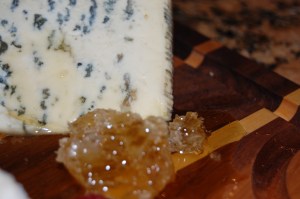
With the blue cheese, I love to add honeycomb.  I always keep some honeycomb in my pantry, for just this purpose.  The sweetness of the honey counteracts the pungency of the cheese, which hubby really appreciates.  Together, the two flavors are perfection.

I always add a few extras to fill out the cheese board.  To this cheese board, I added half of a small date-and-walnut loaf, a handful of dried black mission figs, and a pile of fresh raspberries.  When you’re shopping for your cheese board, pick out your cheeses first and then think about how the flavors will interact with each other.  The dates and the figs both went equally well with the camembert and the cheddar.  You need some extras for visual interest – to break up the cheeses – and for flavor complexity.  For dessert cheese boards, I like to add dried fruits; for appetizer cheese boards, I pile up olives, a variety of crackers, and cherry tomatoes.  Last but not least, whether this is dessert or hors d’ouvres, you’ll need of bread or crackers to serve with the cheeses.

Oh, and wine.  You can’t forget the wine.

Citrus Roasted Brussels Sprouts

I can practically hear you screaming now.  “NOOOOOOOO!!!!!!  Mommmmmmm!!!!!  No brussels sprouts!  No, no, NOOOOOO!!!!!”

Well, save me the drama.  Sure, they’re good for you.  Cry me a river.  The fact of the matter is, brussels sprouts are good.  No, better than good – they’re delicious.  Of course, I think all vegetables are delicious (except okra… I’ve tried, but I can’t, I just can’t).  But brussels sprouts are one of my favorite vegetables.  Carrots?  Yes, please.  Squash?  Mmmm, indeed I will.  Broccoli?  Load ’em up.  Brussels sprouts?  GIMME!  Because I love brussels sprouts so much, I have taken it upon myself to change people’s minds about them.  It’s my mission in life.  Because most people, ya know, HATE them.  They are the butt of every Thanksgiving joke.  They’ve even made an appearance on “Friends” as “Monica’s stinky brussels sprouts.”  Well, I’m sick of it.  Enough with the smelly gym socks references!  Brussels sprouts don’t deserve the reputation they seem to have acquired.  So I’m here to make the case for brussels sprouts, and this is it: Roast them.  Roast them now.  If you are one of the multitudes who hate brussels sprouts, it’s because you haven’t had them like this.  So go roast them, then eat them, then apologize to all brussels sprouts you have scorned over the years.  Your Honor, the defense rests.

Okay, I’m being a little bit quippy here, but it’s true: there are ways to screw up brussels sprouts.  In fact, it’s pretty easy to screw them up, and when you do, they’re the definition of gross.  For instance, boiling brussels sprouts, to put it mildly, does not show these vegetables off to their best advantage.  They are actually very versatile and tasty, but people insist on boiling them.  Don’t!  Put the saucepan down and back away from the stove!  Roast them like this, or shred and saute them with a tiny bit of creme fraiche and bacon, or steam them and dress them with a tart vinaigrette.  But don’t boil them.  (And if you disregard this advice, don’t come crying to me about gym socks, ‘cuz I don’t want to hear it.)  Brussels sprouts are wonderful many ways, it’s true, but I think they’re at their best when roasted.  The outer leaves caramelize and become crispy and salty and savory, and the inside leaves take on the wonderful, nutty character that you will NEVER achieve by boiling.  And then when you hit them with some lemon juice and zest, man, oh man, they are amazing.  Brussels sprouts will change your life.

Citrus Roasted Brussels Sprouts

2 cups brussels sprouts, stems trimmed, outer leaves removed
1 lemon, zested and zest reserved
1/4 cup extra-virgin olive oil
kosher salt
fresh black pepper

  • Preheat oven to 450 degrees Fahrenheit.
  • Clean and trim brussels sprouts: slice off the bottom of the sprout (the woody, tough part) and remove any outer leaves that have become tough and/or yellow and/or wilted.  Cut sprouts in half and rinse under running water.
  • Place brussels sprouts halves in a large bowl and dress with olive oil and a generous seasoning of kosher salt and fresh-ground pepper.  Zest a lemon, reserving half of the zest.  Add the remaining half of the zest to the brussels sprouts mixture.  Roll the lemon to distribute the juices, then slice in half.  Squeeze the juice of half the lemon over the sprouts, reserving the second half for later.
  • Roast for 45-50 minutes, tossing once or twice.  Remove from oven and transfer to serving bowl.  Squeeze the second lemon half over the sprouts, and sprinkle the remaining zest over the top.
  • Change minds, change lives.

Source: Adapted from The Barefoot Contessa Cookbook

Metropolitan Cooking and Entertaining Show

In 2009, for the first time, I attended the Metropolitan Cooking and Entertaining Show in DC.  This massive trade show had somehow escaped my notice until I received an email about it from my mentor at work, a major foodie himself.  When I looked into it and saw that Giada de Laurentiis was going to be doing a cooking demonstration, I didn’t hesitate for a second!

The entryway to the show floor:

Some vendors set up on the show floor (this was right when the show opened, before the crazy crowds hit):

Fellow veggie lovers at Indigo Rabbit:

Indigo Rabbit is a cookie company based in New England, which hides vegetables – such as squash, for instance — in their cookies!  The cookies are delicious and chewy, and I promise they don’t taste like vegetables.  We chatted about hiding vegetables in baked goods and exchanged blog addresses – check them out at www.rainbowonyourplate.com – and  I brought home a box of their Seriously Cinnamon Almond cookies, which are sweetened with cane sugar and include a puree of carrots and sweet potatoes!  As cookies go, these are just about as healthy as they can get, and taste better than pretty much any other store-bought cookie I’ve encountered.  They have quite a few flavors – all delicious.  Hubby and I also liked the Luscious Lemon Chewies, although the Seriously Cinnamon Almond was by far my favorite.

(Nota Baker: I paid full price for the cookies.  My recommendation is based completely on the fact that they are absolutely freaking delicious.  I have not received any free products in exchange for recommending these cookies.  Just try them.  You’ll see.)

Yummy:

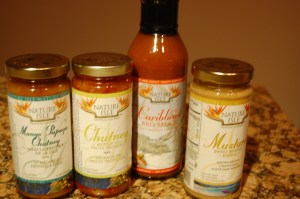
I also picked up some fun tropical fruit sauces – mango mustard, banana barbeque sauce, and two tropical chutneys – from the Nature Isle booth:

After I made friends with the Indigo Rabbit crew, hubby and I headed over to see what was, for us, the main event…

GIADA!!!!!!!!!!

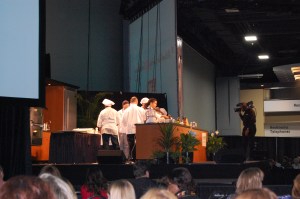
Chefs prepare the stage for Giada’s demonstration:

And out she came!  Giada brought members of the audience up on stage to make a roasted pork loin with balsamic sauce, rigatoni with butternut squash, and espresso ricotta creme.  She also answered audience questions throughout the demonstration.  Hubby and I were too shy to stand up and ask a question, although in retrospect, I don’t think there is anything we could have said that would be more embarrassing than the guy who prefaced his question with, “First of all, you’re gorgeous.”

Please don’t let the camera fool you.  We actually sat pretty close to the stage.  Clearly, I need a big, clunky zoom lens for my giant camera.  Santa, are you listening?

Giada was fantastic!  Her cooking demonstration was a blast and she was endlessly patient with the multitudes of audience members who didn’t actually have a question, but just wanted to come up onstage and cook with her.  After the demonstration, hubby and I took one more swing through the trade show and then headed home to make some homemade pasta.  Of course, right?

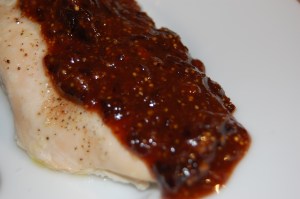
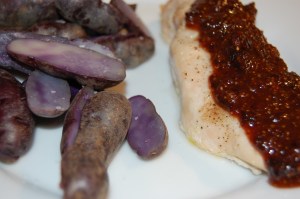
Roasted Chicken Breasts with Fig Sauce

I’ve often seen the recipe for pork loin with fig sauce in Everyday Italian and thought to myself, “hmmm, that fig sauce looks tasty.  Too bad I don’t eat pork.”  As a result, I’ve never made this fig sauce before… until recently, when it occurred to me that chicken and pork are very similar.  Both can be a bit bland unless you dress them up with other flavors, and both marry well with the same flavors – although I think that chicken, if anything, can be even more versatile than pork.  I realized that this fig sauce would go just as well with chicken as it would with pork.  Don’t ask me why it took me several years to discover that there was nothing stopping me from making Giada’s fig sauce.  I’m obviously not the brightest bulb in the shed.  Fortunately, hubby likes me anyway.

As Giada herself points out, this is an incredibly versatile sauce.  Sure, it’s great with chicken – or pork, for that matter – but it’s also sweet enough to serve for dessert.  Giada suggests having it over ice cream.  I also think it would be perfect as a sauce for a simple vanilla bean pound cake.  I can even see incorporating it into a galette with fresh figs.  But in my opinion, the best thing about this sauce is that it’s made with dried mission figs, so fig-lovers like me don’t have to wait until the very short fig season to enjoy it.  Mangia!

Roasted Chicken Breasts with Fig Sauce

Ingredients

For the fig sauce…
1 cup port or other sweet red wine*
2/3 cup reduced-sodium chicken broth**
8 dried black Mission figs, chopped coarse
1 sprig fresh rosemary
1 cinnamon stick
1 teaspoon honey
1 tablespoon unsalted butter
pinch salt
pinch pepper

For the chicken…
2 medium chicken breasts
kosher salt and black pepper to season
extra-virgin olive oil

  • Preheat your oven to 425 degrees Fahrenheit.  While the oven is preheating, prepare the chicken breasts – simply season them generously on each side with salt and pepper, place on a foil-lined baking sheet, and drizzle with the olive oil.  Roast at 425 for approximately 15 minutes, or until a meat thermometer shows an internal temperature of 165 degrees.  Remove from oven and allow to rest.  (They will continue to cook while resting.)
  • Meanwhile, make the fig sauce: combine the port, chicken broth, chopped figs, rosemary, cinnamon and honey in a saucepan and boil over medium-high heat until the sauce reduces by half, about 15-20 minutes.  Remove the cinnamon stick and rosemary sprig.  Transfer fig mixture to a food processor or blender and puree to desired consistency.  Stir in butter, salt and pepper.
  • Serve the chicken breasts with fig sauce on the side, or simply pour it right over!  Mmmmm…

Yield: serves 2

Source: adapted from Everyday Italian, by Giada de Laurentiis

*The original recipe calls for port.  I did have port on hand, but I also had an open bottle of Schnebly Redlands passion fruit wine from Florida, so that’s what I used.  Port and figs are a classic combination, so I’m sure that’s what I’ll normally use, but feel free to experiment if you have a different dessert wine on hand – especially if you are planning to use this sauce in a dessert anyway.

**Just because the idea of chicken broth in a dessert is pretty strange, if I were making this as a dessert sauce instead of to serve with roasted meat, I’d probably substitute water.  Do as you see fit.

Scenes of the Wine Country

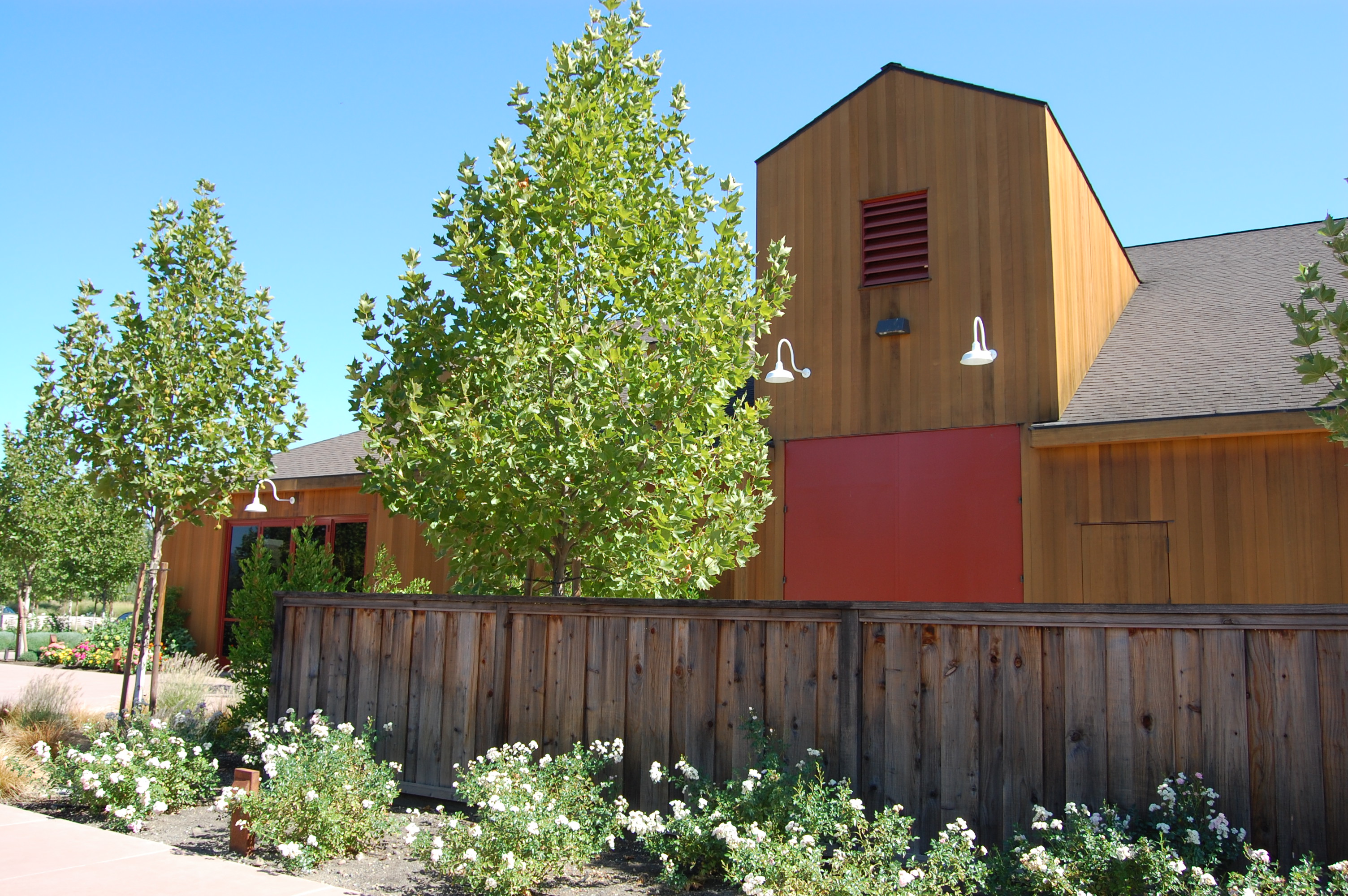
Here are a few final shots of hubby’s and my travels through Napa and Sonoma.  It was an amazing trip, and we hope to return sooner rather than later.

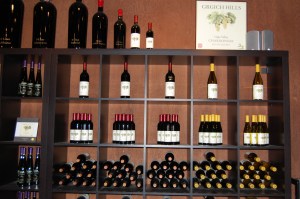
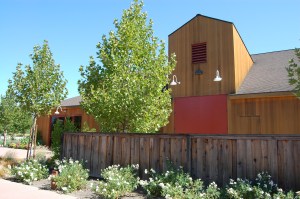
The tasting room at Grgich Hills, a biodynamic winery that is doing some magical things with their grapes:
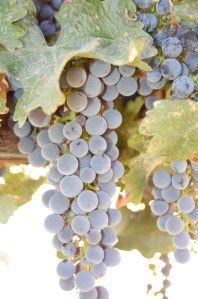
These grapes outside the Grgich Hills winery look pretty healthy, don’t they?
Grgich Hills wines aging in French Oak barrels… soon to be consumed by hubby, no doubt!  This was his favorite of the wineries we visited all week.

Cakebread Cellars!
Grapes being crushed at Cakebread.  I’m not sure hubby and I were supposed to be hanging around this area, but nobody told us to leave, and it was extremely cool to watch.

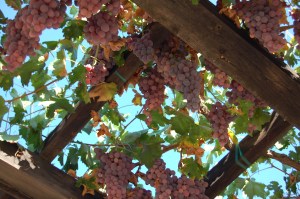
Grapes growing on a trellis.  I’m pretty sure this is what Heaven looks like.
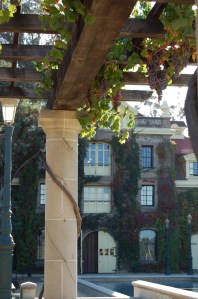
Rubicon Estate.  This was another of hubby’s particular favorites.
A picturesque fountain on the hill behind Rubicon:

This is Cliff Lede Winery.  They pride themselves on their Cabernet Sauvignon, which was delicious… but they were also making the best (and least expensive!) Sauvignon Blanc that I tasted all week.  We brought three bottles of it home.

Clearly, I’m not the only one who likes Cliff Lede Sauvignon Blanc.  It was served at a White House luncheon in 2006.  Bill Clinton has served Cliff Lede wines as well, and wrote Cliff a nice letter about how much he enjoyed the wine.
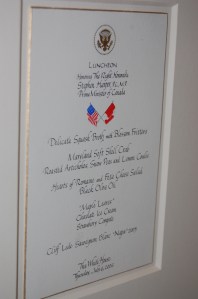
(The winery was founded by a Canadian – O Canada! – so it’s the obvious choice to serve when the Canadian Prime Minister is visiting!)

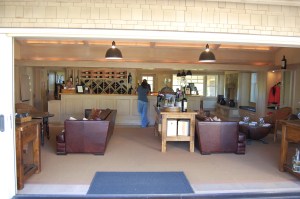
Cliff Lede had a beautiful tasting room, too.  I pretty much wanted to move in there.  I mean… it’s a place where people love both Sauvignon Blanc and Canada!  My kind of people!
Finally – the long anticipated visit to Domaine Carneros!  This was what I was most looking forward to on the trip, and it didn’t disappoint.

The view from the deck of Domaine Carneros…

Unfortuntately, the lighting wasn’t great below ground (duh), but they had a wonderful collection of vintage champagne-making equipment, as well as views into the cellars where their own bottles of sparkling wine were being turned.  We tasted some amazing sparklers there, including La Reve (“The Dream”), a magnificent brut rose, and their standard brut (which is supposed to be widely available, so we didn’t buy it, but now I can’t find it in NoVA!  If anyone knows who may carry it…).  Domaine Carneros also does great Pinot Noir, which hubby especially loves.  We joined the wine club, so now every two months we get a bottle of red and a bottle of bubbles.  Works for me!

Oh, my goodness, I want it all!

Hubby and I had a fabulous time in California.  San Francisco was a beautiful city, and the wine country was everything I had imagined it to be – and more!  I’m sure we will be going back, but in the meantime, we have plenty of amazing wine that we brought home, so we can continue our California dreaming for quite some time.  Stay tuned for reviews of some of our souvenir wines in future “Wine Notes” posts!